What is the standard glass for the 80 Series windows?What is the structure and sound insulation principle of 5+22A+5 insulated glass?
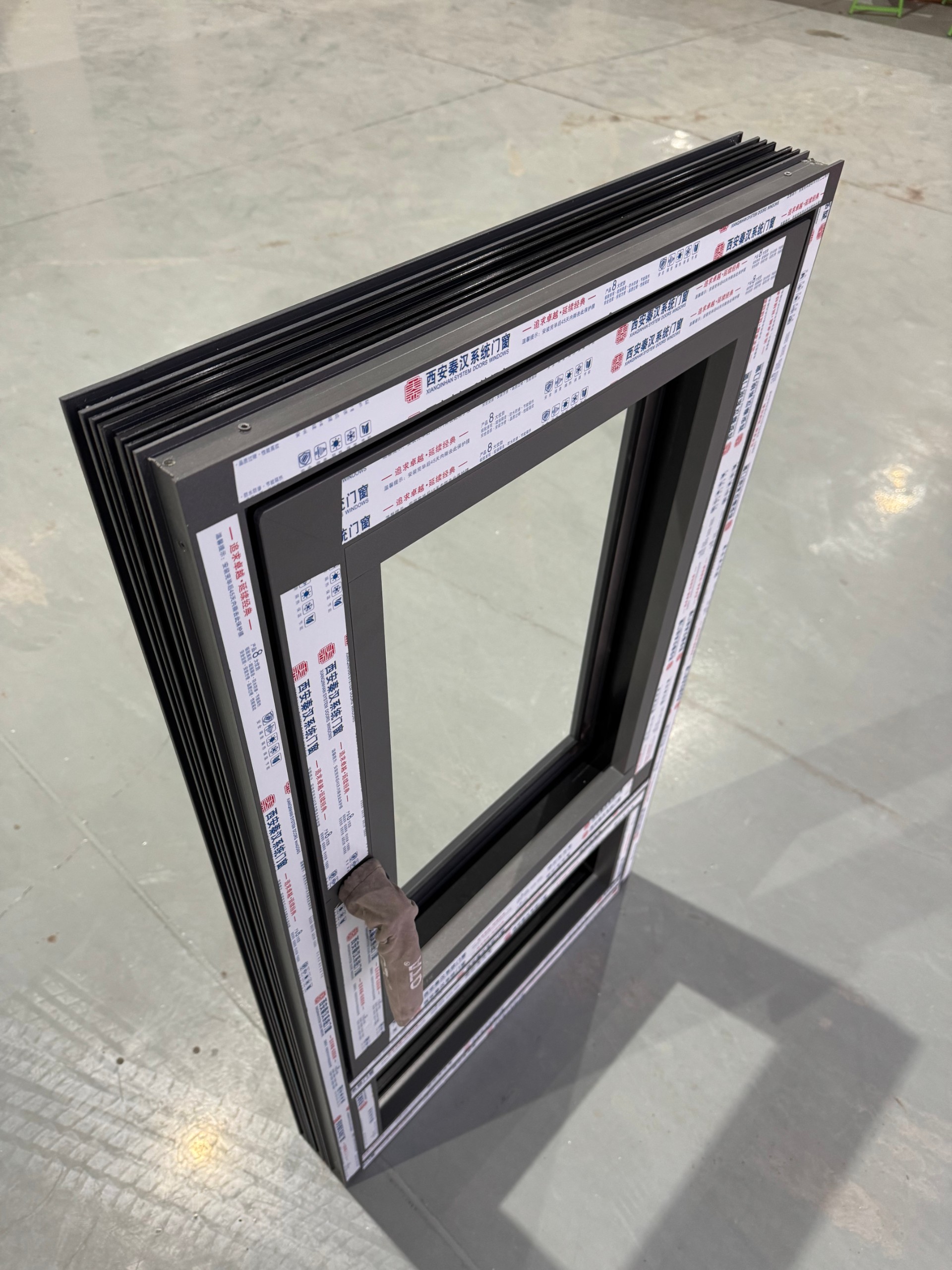
The standard glass for the Hyperstron 80 Series thickened single-opening aluminum alloy window is5+22A+5 insulated glass. This is a double-layer insulated glass structure, and its naming directly corresponds to the specific physical composition.
What does each layer of the 5+22A+5 insulated glass represent?
This configuration name clearly defines the specifications of each part:
- The first "5"This represents the thickness of the outdoor glass, which is 5 millimeters.
- "22A"This indicates the width of the spacer layer (hollow layer) between the two glass panes is 22 millimeters, where "A" refers to the air layer (Air).
- The second "5"This represents that the thickness of the indoor glass is also 5 millimeters.
How does the hollow layer "lock" sound to achieve sound insulation?
The hollow layer primarily weakens noise by changing the medium through which sound waves propagate. After penetrating the first layer of glass, sound waves need to transition from solid glass into the much lower-density 22-millimeter air layer, a process that causes significant attenuation of the sound wave energy. Subsequently, when the sound wave attempts to penetrate the second layer of glass, another medium transition occurs, further consuming its energy.
The wider hollow layer provides ample space for this energy attenuation, thereby reducing the intensity of noise transmitted indoors. For mid- to low-frequency sound sources such as traffic noise, the blocking effect of this multi-layer medium is effective.
This configuration provides a good sound insulation foundation for the window. In specific projects, the overall sound insulation effect of the window also depends on the sealing performance of the profile and the installation process.
In residential scenarios, how is the actual sound insulation experience with this glass configuration?
How many decibels can 5+22A+5 glass reduce for street traffic noise?
Based on the product's application experience in residential projects, 5+22A+5 insulated glass (especially when paired with the 80 Series thickened profile) can effectively reduce street traffic noiseSubjective Disturbance。 It excels at attenuating the more piercing high-frequency components in traffic flow (such as honking horns, tire friction noise) and provides a certain improvement to low-frequency rumble. After closing the window, the noise transmitted indoors becomes deeper and lower in volume, thereby significantly enhancing the quiet comfort of bedrooms and living rooms.
It should be noted that its performance advantage stems directly from the optimized design of the 22mm thick air layer, but the specific noise reduction values vary depending on the actual noise source and installation environment.
For common conversation and television sounds in a residence, is its effect obvious?
The effect is very obvious.。 Common conversation and television sounds in a residence primarily belong to the mid-to-high frequency range. The 5+22A+5 structure can effectively block the propagation of this type of sound.
When the windows are closed, the clarity of speech and television sounds from adjacent rooms or outdoors is significantly reduced, becoming faint and distant, which provides good privacy and a quiet foundation for home life. This outstanding filtering of daily noise is one of the core comfort values that this glass configuration brings to the 80 Series windows.
Under what circumstances should you choose or upgrade the glass configuration for the 80 Series?
Choosing 5+22A+5 the standard configuration or upgrading depends on your project's noise environment and specific requirements for quietness. This is the key decision point for balancing performance and cost within the 80 Series framework.
Which projects are recommended to use the 5+22A+5 standard configuration?
The 22mm air gap of this configurationagainst low to mid-frequency ambient noiseprovides good insulation. Recommended for:
- Noise sourcesResidential projects primarily dominated by low to mid-frequency noise from urban traffic, community daily activities, etc.
- Regular living spaces, without extreme or special requirements for sound insulation.
In most residential scenarios, this configuration effectively meets the requirements and is a cost-effective choice.
Which noise environments might require considering thicker or different combinations of glass solutions?
When facing specific challenges, you should discuss upgrade possibilities with the technical team:
- High-frequency or extremely strong noise: Such as proximity to airport flight paths, elevated highways, or other major traffic arteries, where sound pressure levels are high.
- High-standard quiet spaces: Such as street-facing bedrooms, studies, or locations highly sensitive to background noise.
In these situations, byincreasing the thickness of the glass panesor usetriple-pane hollow glassand other solutions, which can further improve sound insulation performance.
When making a decision, please first clarify the project'sspecific noise sourcesand the space'srequirements for quietness, then evaluate whether the standard configuration is sufficient. For requirements beyond the scope of the standard configuration, it is recommended to further confirm a customization plan.
How to evaluate and confirm whether the sound insulation configuration of the 80 Series glass meets project requirements?
When you receive a quotation for an 80 Series single-opening aluminum alloy window with thickened glass, determining whether its sound insulation configuration is 'good' relies on the core step of translating parameters into verification steps that match your project requirements.
What key parameters should the purchaser confirm with the supplier?
The '5+22A+5' glass configuration on the quotation is a basic reference point. To evaluate it accurately, you need to clarify the following details with the supplier, which will directly determine the upper limit of the sound insulation performance:
- The specific composition of the glass: Confirm whether '5+22A+5' refers to two pieces of 5mm thick ordinary float glass, or if one of them is laminated glass (e.g., 5mm tempered glass + 1.14mm PVB + 5mm tempered glass).Laminated glass has significantly better sound insulation against mid- and low-frequency noise compared to ordinary insulated glass.
- Air Layer Treatment: Is the 22mm air layer filled with inert gases such as argon?Gas filling can slightly improve sound insulation performance, and more importantly, affects thermal insulation.
- Sealing Process: Ask whether the aluminum spacer bars inside the insulated glass use a continuous bending process (reducing leakage points) and whether double sealing is applied overall.This concerns long-term airtightness; insulated glass with air leaks will see a sharp decline in sound insulation performance.
- Window Frame Sealing System: Confirm whether the sealing strip for this 80 Series window type uses EPDM (Ethylene Propylene Diene Monomer) or silicone, and the specific number of sealing channels.Multi-channel sealing is key to blocking sound transmission through gaps in the window frame.
How can the sound insulation performance be verified during the sample stage?
Before bulk purchasing, obtaining and evaluating samples is the most reliable step:
- Physical Observation and Touch: Check if the seal around the glass edge is even and secure.Gently tap the glass with your hand to feel its thickness and overall rigidity and texture.
- Simple Sound Insulation ComparisonInstall the sample window in a quiet environment and simulate opening and closing.Listen carefully to see if the sound at the moment of closing is crisp and free of loose rattling noises.If conditions allow, you can create controlled noise outside the window (such as playing music at a fixed volume) to initially perceive the degree of volume reduction indoors; although this is not a professional test, it can intuitively reflect the overall sealing effect.
- Confirm Installation NodesRequest typical installation node diagrams for this window series from the supplier.The filling and sealing treatment between the window frame and the wall (such as the use of foam sealant, sealant) is the 'last mile' for the final soundproofing effect and must be planned in advance.
Key Decision PointIf your project is located in a high-noise environment such as a street-facing or high-speed railway-adjacent location, or if you require quietness for bedrooms or studies, then merely confirming '5+22A+5' is insufficient. You need to clearly inform our technical teamabout the specific type of noise source and the desired decibel reduction level, based on which we will calibrate or recommend a more suitable glass and sealing solution for you. Conversely, if used in interior spaces with general sound insulation requirements, the standard configuration may suffice.
The next step is: tell us the specific location, floor level, and primary noise sources of your project to receive targeted configuration recommendations.
Frequently Asked Questions
What does the "A" mean in the 5+22A+5 glass for the 80 Series windows?
"A" stands for Air, meaning air.This 22A indicates a 22-millimeter-wide air layer between two 5-millimeter-thick glass panes, which is the key structure that forms insulating glass and achieves sound insulation and heat insulation functions.
Can 5+22A+5 glass completely block outside noise?
Cannot. Soundproofing for any window is a systemic project; the glass is a crucial component, but it cannot completely block all noise. The 5+22A+5 configuration can effectively weaken and reduce noise interference in most residential scenarios, making it deeper and quieter, significantly improving comfort. For extremely high-intensity specific noises, a more professional custom solution may be required.
When purchasing 80 Series windows, how can you ask the supplier the key questions?
You can directly ask: 'Besides 5+22A+5, is the glass insulating layer filled with argon gas?'" and "Is the aluminum strip in the insulated glass bent as a single piece?"" and "How many seals are used between the window sash and frame?"”。These questions directly address the key processes that affect long-term sound insulation performance.
Learn More
Precise matching for sound insulation performance requires considering the specific location, floor level, and primary noise sources of your project.If you have doubts about whether the standard configuration is suitable, or need recommendations for special environments like streetside or roadside, please share your project information with us. Our technical team will provide you with a targeted configuration analysis and solution recommendations.
Related Products:80 Series Thickened Single-Open Aluminum Alloy Window