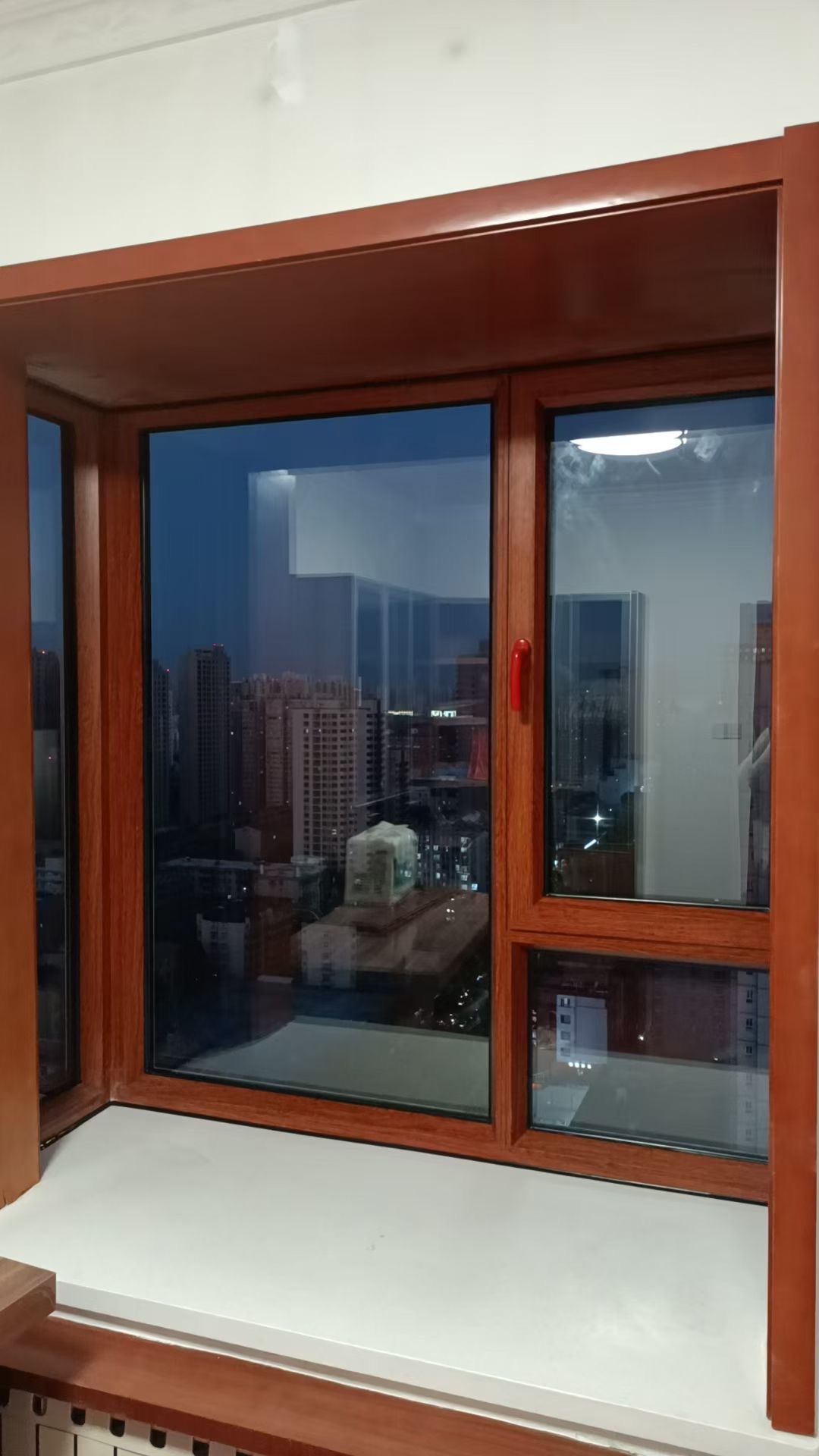
What is the 80 series thickened single-open aluminum alloy window?How does it handle coastal corrosion?
Product Base: 6063-T5 Aluminum Alloy Profile with 1.8MM Wall Thickness
The Hyperstron 80 Series thickened single-opening aluminum alloy window is primarily used in residential, engineering, and distribution channel applications. Its core components are 6063-T5 Aluminum Alloy ProfileThis is a common architectural aluminum material with good comprehensive performance and surface treatment adaptability. One of the significant features of this series of window types is 1.8mm profile wall thickness, which is increased compared to standard profiles, forming the basis of its structural strength.
Core Defense: The Critical Role of Surface Treatment Processes in Weather Resistance
Aluminum alloy profiles themselves have limited corrosion resistance, especially in coastal environments with high salt spray and moisture content. Therefore, the key step to enhancing their weather resistance lies in surface treatment. Common processes such as anodizing, electrophoresis, or powder coating form a dense protective layer on the profile surface.
This barrier effectively isolates corrosive media in the air from direct contact with the aluminum substrate, thereby delaying the corrosion process. Its protective effect depends directly on the type and quality standards of the surface treatment process employed.
What are the main challenges of coastal corrosion?How does the 80 Series profile specifically address these?
In coastal environments, the corrosion challenges faced by aluminum alloy windows mainly stem from specific climatic factors. To address these challenges, the 80 Series profile provides a foundational response through its design and manufacturing process.
Mechanisms of Salt Spray Erosion and Pitting Corrosion
Coastal air is rich in salts such as chloride ions. When these salts adhere to the aluminum alloy surface in the form of mist, they form a conductive electrolytic film, which initiates and accelerates the electrochemical corrosion process of the aluminum substrate. This corrosion oftenPittingin the form of tiny corrosion pits on the surface of the profiles. Initially, it is not easily noticeable but gradually develops inward.
Humidity Cycles Accelerate Oxidation and Decorative Layer Damage
Coastal areas have high humidity, often accompanied by daily or alternating sunny and rainy dry-wet cycles.Dry-wet Cycles。 A continuously humid environment provides a medium for corrosion, while the alternating dry and wet conditions repeatedly damage the natural oxide film formed on the aluminum surface, accelerating its consumption. This not only weakens the corrosion resistance of the profiles but can also cause the surface decorative layer (such as sprayed coatings) to fade, blister, or peel.
To address the aforementioned challenges, the core coping foundation of the 80 Series thickened single-open aluminum alloy window lies in itsMaterial and Physical Thickness. The product uses 6063-T5 aluminum alloy and featuresa wall thickness of 1.8 mm, providing a more substantial physical barrier for the profiles. Meanwhile, profiles applied in coastal projects require higher standardsurface treatment processesas the first line of defense. It is recommended to confirm the specific coating type and weathering performance data with the supplier to match the corrosion grade requirements of the specific project.
For precise selection, it is recommended that you provide the project geographical location information to assess whether the surface treatment process of the current 80 Series products is fully suitable, or whether a solution more targeted at extreme environments is needed.
Which coastal projects are suitable for the 80 Series?In which situations is further evaluation required?
Recommended Scenarios: Residential Window Configurations and Standard Project Procurement
The configuration of the 80 Series thickened single-opening aluminum alloy window (1.8mm wall thickness, 5+22A+5 glass) is typically suitable for window configurations in typical coastal residential, hotel, and commercial buildings. Its physical strength and weather resistance can meet the anti-corrosion and wind pressure resistance requirements of most standard projects, making it a reliable starting point for door and window selection in coastal projects.
For most standard project procurements, as long as the project is not located in an extreme environment with strong corrosion or high wind pressure, the basic protection solution provided by the 80 Series can be considered as a priority option.
Boundaries and Risks: Higher Requirements or Complex Conditions Requiring Assessment
In the following boundary cases, it is not recommended to directly use the standard solution, or you are required to provide further project parameters to assess the risk:
- Lower-level buildings in direct contact with seawater or high-humidity spray: This type of environment has anti-corrosion grade requirements far exceeding the conventional.
- Super high-rise buildings in areas with strong typhoons (e.g., over 25 floors): Specialized wind load calculations are required to confirm whether 1.8MM wall thickness is sufficient.
- Industrial environments with special chemical medium requirements for coatings: For example, near chemical plants, it is necessary to verify whether the profile surface treatment can withstand specific corrosion.
- Public buildings with stringent requirements for air tightness, water tightness, or sound insulation performance: For example, large-scale coastal exhibition centers or theaters.
For the above situation, please provide your specific building height, environmental corrosion grade, or design code requirements to our technical team. We can assist you in determining whether the current solution is applicable, or provide more suitable solutions such as increasing wall thickness or adopting special surface treatments (e.g., fluorocarbon coating).
How to confirm anti-corrosion performance when purchasing?What is the next step?
Determining whether an aluminum alloy window is suitable for a coastal project hinges on verifying its specific anti-corrosion process. General descriptions do not provide a basis for decision-making. Below is a verification checklist and action path for your reference.
Verification Key Points: Focus on which parameters, reports, and process commitments
When inquiring with suppliers (including Hyperstron), it is recommended to directly ask for the following information:
- surface treatment processes: Specify whether it is anodized, powder-coated, or fluorocarbon-coated, and request the corresponding implementation standards (such as GB 5237).
- Coating Thickness and Test Reports: Ask about the coating thickness (e.g., powder coating for coastal environments often requires ≥60μm) and the test duration of the salt spray test report (based on standards like GB/T 10125).
- Profile CertificationRequest material certification for 6063-T5 aluminum alloy profiles.
After obtaining the information, you must requestSample Confirmationto inspect the surface texture and craftsmanship of the actual product.
Decision Path: From Requirement Confirmation to Contacting a Professional Team
- Clarify Your Own Requirements: Before consulting, please first clarify the project'senvironmental grade(e.g., distance from the sea),number of window typesandBudget Range。
- Inquiry Regarding Carrying Issues: Use the above verification points as a communication checklist and contacthyperstronProduct team. They can match a solution based on your specific parameters.
- Reference Contract Terms: In the procurement contract, the confirmed anti-corrosion standard can be used as the basis for quality acceptance.
Frequently Asked Questions
Q: What should I do if the supplier cannot provide a salt spray test report? A: For coastal projects, this is a significant risk indicator. A written test report is an objective basis for evaluating corrosion resistance performance.
If it cannot be provided, you need to reassess whether the product meets the project's long-term weather resistance requirements.
Q: How can I preliminarily judge the quality of the anti-corrosion process through a sample? A: You can observe the uniformity of the sample's surface color, feel the coating texture by touch, and try lightly scratching with your fingernail in an inconspicuous area to see if the coating adhesion is firm. Of course, a more precise judgment still needs to be based on the technical parameters provided by the supplier.
Q: Besides the surface of the profile, what other anti-corrosion details should be considered when purchasing? A: You should check whether hardware components (such as hinges and locking points) are made of stainless steel or have undergone anti-corrosion treatment. Additionally, the drainage design of the window frame and the quality of the sealant used during installation also collectively affect the overall long-term anti-corrosion effectiveness.
These details can all be confirmed with the professional team during your consultation.
Learn More
Choosing reliable doors and windows for your coastal project begins with precise parameter matching.If you have questions about the applicability of the 80 Series under specific working conditions, or need to understand more detailed anti-corrosion process data, please feel free to contact the Hyperstron technical team at any time. We will provide you with targeted selection advice.
Related Products:80 Series Thickened Single-Open Aluminum Alloy Window