
What questions should be asked of suppliers when purchasing FG110F dual inward-opening broken bridge windows?
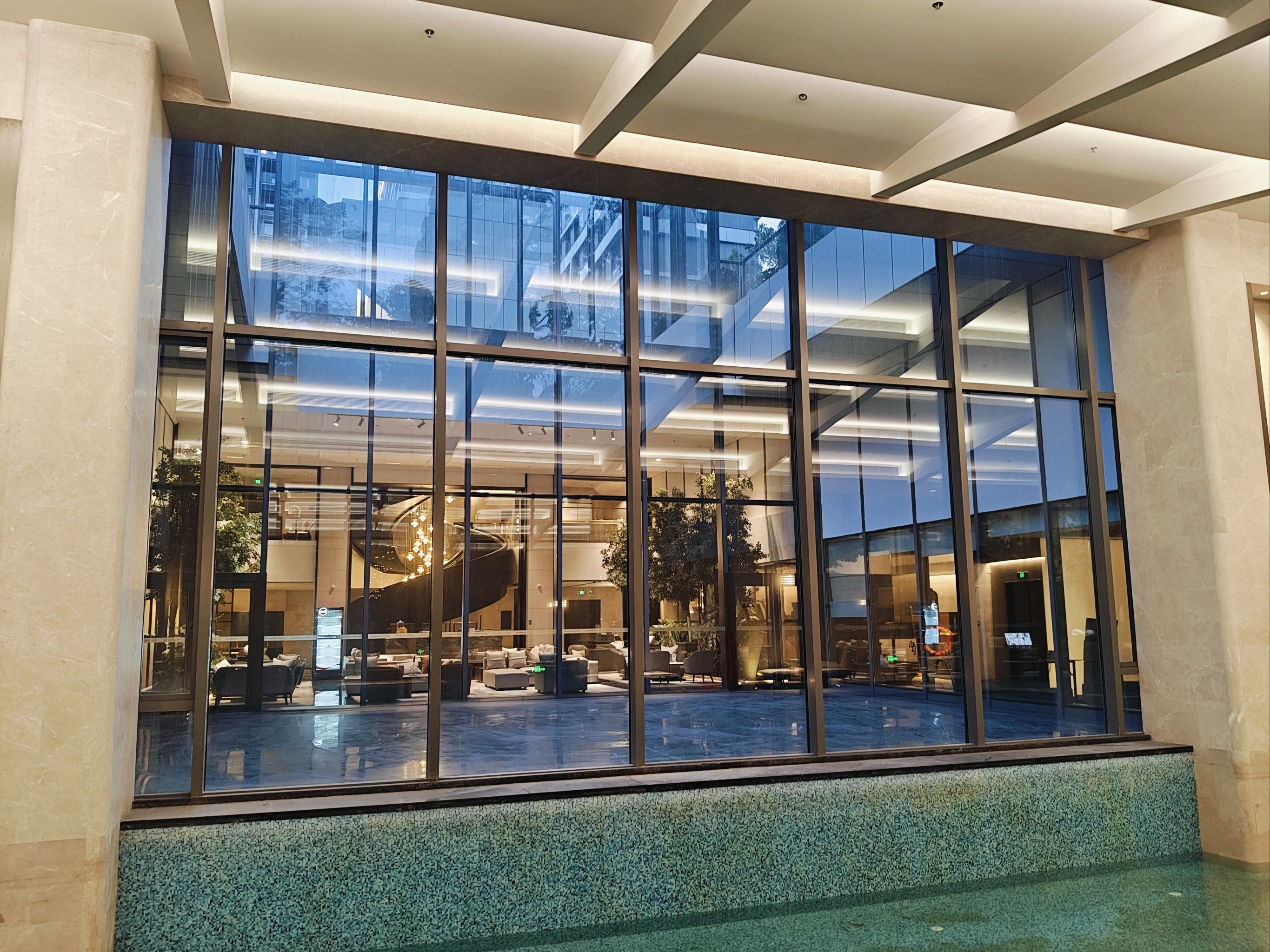
What are the core capabilities of the FG110F dual inward-opening thermal break window?Understand the key facts before communication
Before consulting a supplier, understanding the basic composition and performance foundation of the FG110F product helps make subsequent communication more focused. Its core capabilities are primarily determined by two parts: the profile framework and the glass components.
Understand the design significance of 6063-T5 aluminum alloy profiles and 2.0MM wall thickness
This window uses 6063-T5 aluminum alloy profiles, a grade that offers a balanced performance in strength and corrosion resistance, making it a common choice in the door and window industry. Its 2.0-millimeter wall thickness parameter typically refers to the thickness of the profile's key load-bearing areas. Under the same design, this thickness usually implies greater structural rigidity, providing a foundation for the window to maintain stability in larger sizes or higher wind pressure environments.
How does the 5+27A+5 glass configuration affect thermal insulation and sealing performance?
The "5+27A+5" glass configuration refers to an insulated glass unit composed of two 5mm glass panes with a 27mm air gap in between. A wider air gap typically helps reduce heat conduction, positively impacting the overall thermal insulation performance of the window. When combined with a thermally broken profile and sealing design, this configuration provides a solid physical foundation for the window's sealing and sound insulation performance.
Understanding these core parameters can help you more effectively match product configurations with specific usage scenarios and performance requirements in subsequent communications.
Which questions can help you verify if the FG110F double-inward-opening thermally broken window matches your project scenario?
During procurement communication, asking the right questions is key to confirming product suitability. The following checklist is designed to help you focus on the core capabilities of the FG110F (such as requirements for thermal insulation, sealing, and inward-opening structure) and verify whether it meets your specific project needs.
Specific questions regarding usage scenarios such as residential window configurations.
Directly asking about typical application cases of the product can help determine if its design intent aligns with your project.
- The FG110F is typically more commonly used inresidential projectsorengineering projects? Could you provide cases similar to my project (e.g., high-rise residential, commercial buildings)?
- My project has requirements forInsulation, sealing, or inward-opening operationIf there are specific requirements, is the design of the FG110F primarily aimed at this type of need?
How to inquire about parameter details to confirm compatibility
The product provides reference configurations (e.g., profile thickness 2.0MM, glass 5+27A+5), but actual projects may require adjustments. Inquire about the following parameters to confirm the customization scope and feasibility.
- Profile and SeriesWhat specific sub-series does the FG110F have? What are the differences between different series in terms of profile cross-section, load-bearing capacity, or thermal break strips? How should I choose?
- Wall Thickness CustomizationWhat is the customizable range for wall thickness?(For example, I need 1.8mm or 2.2mm), and how would this affect the quote and lead time?
- Glass ConfigurationBesides the reference configuration, is it possible to adjust totriple-pane double-cavity、Low-E coating?or other glass combinations?How to confirm if the glass groove is compatible?
Through the above questions, you can quickly clarify the standard capability boundaries and customization possibilities of the FG110F. It is recommended to organize the specific parameters of the project (such as dimensions, regional climate requirements) and provide them to the supplier for precise solution matching.
How to assess the risk and value boundaries of a supplier's proposal through questioning?
When communicating the procurement plan for the FG110F double-inward-opening broken bridge window, proactive questioning is key to clarifying service boundaries and assessing potential risks. The following questioning directions help differentiate the value of proposals.
Inquire about service content to differentiate proposal completeness
Differences in supplier quotes often stem from varying levels of service depth. You can inquire about the following details to evaluate:
- Customization and Adaptation CapabilitiesWhen project drawings have special requirements (e.g., dimensions, opening methods), how does the supplier adjust?This can determine whether they provide standard products or possess engineering adaptation capabilities.
- Technical Support and After-Sales ServiceClarify the specific methods and response responsibilities for installation guidance and on-site issue handling, and understand whether the solution includes ongoing support.
- Delivery TimelineInquire about the key nodes and buffer arrangements from order to delivery to assess their ability to guarantee project progress.
Verify sample confirmation and bulk order support details.
Ensuring the plan can be implemented from samples to mass production is the foundation for controlling long-term risks.
- Sample ConfirmationBe sure to request samples with the same craftsmanship as future bulk goods, and verify that key configurations such as profiles, glass, and hardware are consistent with the agreement.
- Bulk Order SupportInquire about the independent quality inspection standards for mass production, the quality documents (such as material reports) accompanying delivery, and confirm their mass production consistency assurance measures.
Determine the complexity of the plan based on the certainty of requirements.
- Scenarios for choosing the simpler (standard) option: When project requirements are clear, and specifications (e.g., profile 2.0MM, glass 5+27A+5) and maintenance expectations are well-defined, the standard configuration can effectively control costs and timelines.
- Scenarios for considering the more complex (customized) option: When the project has special performance requirements (e.g., extreme climate) or long-term maintenance needs, it may be necessary to pay for customized upgrades.
The core decision boundary lies in:Whether the existing standard solution can clearly and unambiguously address the project's core needs (e.g., insulation, sealing, inward-opening structure). Avoid over-investing in features that are not required.
Based on the answers after communication, how should you adjust your procurement decisions and actions?
In-depth communication with the supplier regarding the FG110F dual inward-opening broken bridge window is a critical step in evaluating whether this product matches your project requirements. The core action following communication is to translate the verbal responses into clear procurement decisions.
Determine the next steps from the Q&A summary
When organizing the supplier's responses, it is recommended that you sort the key information according to the following dimensions and make corresponding decisions:
- Product Performance and CompatibilityThe supplier's answers regarding wall thickness adjustments (e.g., upgrading from 2.0MM), flexibility in glass configuration, and customization based on special drawings directly determine whether the product can meet the specific physical performance requirements of your project.If their response clearly supports your core configuration requirements, the project has a feasible foundation.
- Delivery and Cost ConfirmationClarify the sample provision cycle, delivery time for bulk orders, and the composition of the quotation (e.g., whether it includes tax, shipping costs).This relates to the planning of the project timeline and the calculation of total costs.
- Support and ServicesConfirm the provider and timeline for technical documentation (e.g., installation guides, node diagrams), as well as the after-sales collaboration process.This is particularly important for contractors and distributors.
Based on the above information, you can form a clear action path:
- If key conditions matchWhen the supplier confirms the customization capabilities you need, the price is within budget, and the delivery time meets project requirements, the next step should be to request a formal quotation and technical specification confirmation, and to conduct physical verification with samples.
- If some conditions do not match but can be adjusted: For example, the wall thickness or glass configuration you need is outside the standard options, but the supplier indicates it can be achieved through customization.In this case, you need to further confirm the additional costs, minimum order quantities, and impact on delivery time for the customization plan, and incorporate these new terms into the final contract.
- If core conditions cannot be met: If the supplier clearly states they cannot provide a key performance parameter you require (such as a specific thermal insulation coefficient) or customization service, then proceeding with this plan may not solve the fundamental problem. You need to consider whether to adjust the original design or evaluate products from other series.
Refer to the series of articles for deeper preparation when necessary
If you still have questions during communication about how to evaluate samples or how to weigh the long-term maintenance costs of different configurations, you can refer to our previous articles on "How to Verify the Quality of Aluminum Window Samples" and "Performance Trade-offs of Different Thermal Break Window Series." This content can help you establish more specific acceptance criteria and value judgment frameworks, thereby making the conclusions of this procurement communication more solid.
Frequently Asked Questions
Q1: After communicating with the supplier, besides price, which issue should you focus on most? A1: What you need to confirm most isthe feasibility and cost of customization.The FG110F supports different wall thicknesses and glass configurations, but does this mean you can obtain a solution that fully meets your project drawing requirements at a reasonable cost and lead time?
Please ask the supplier to provide a clear 'can/cannot do' response and the related commercial terms for the specific configuration changes you propose.
Q2: The supplier says they can do it. How do I know the product they produce will actually work? A2:Sample verificationis an indispensable step. Do not just look at the sample's appearance; you should verify it against the confirmed specifications (such as wall thickness, glass type) and focus on testing the smoothness of operation and the fit of the sealing strips.
For bulk purchases, the sample serves as the physical benchmark for both parties to reach a consensus on the final product quality.
Q3: What should I do if the supplier's quote is higher than my budget, but everything else is suitable? A3: This requires analyzing the cost structure. First, confirm whether the quote is based on thecomplete configuration。
Secondly, explore whether standard options (such as regular wall thickness or standard glass configurations) can meet your needs at a lower cost. Provided that core performance requirements like insulation and sealing are met, choosing a more economical configuration is a common cost optimization method, rather than solely pursuing the highest parameters.
Q4: As an engineering contractor, after communication, I need to submit a proposal to the client. What commitments from the supplier should it include? A4: You should present the client with aproposal summarybased on the supplier's clear answers, focusing on: 1) Product model (FG110F) and the selected key configuration parameters;2) Performance indicators promised by the supplier (e.g., estimated insulation performance range based on the configuration);3) A clear delivery timeline;4) Price terms (e.g., tax-inclusive, freight). Documenting the communication results is the first step towards clarifying project responsibilities.
Learn More
If you have completed the preliminary evaluation or have further questions regarding the specific configuration, quotation, and technical support for the FG110F, please feel free to submit your project parameters (such as opening dimensions, location, performance requirements), and we will match you with a dedicated solution.
Related Products:FG110F Double Inward-Opening Thermal Break Window