
What on-site conditions need to be confirmed before purchasing the FG110F double inward-opening broken bridge window?
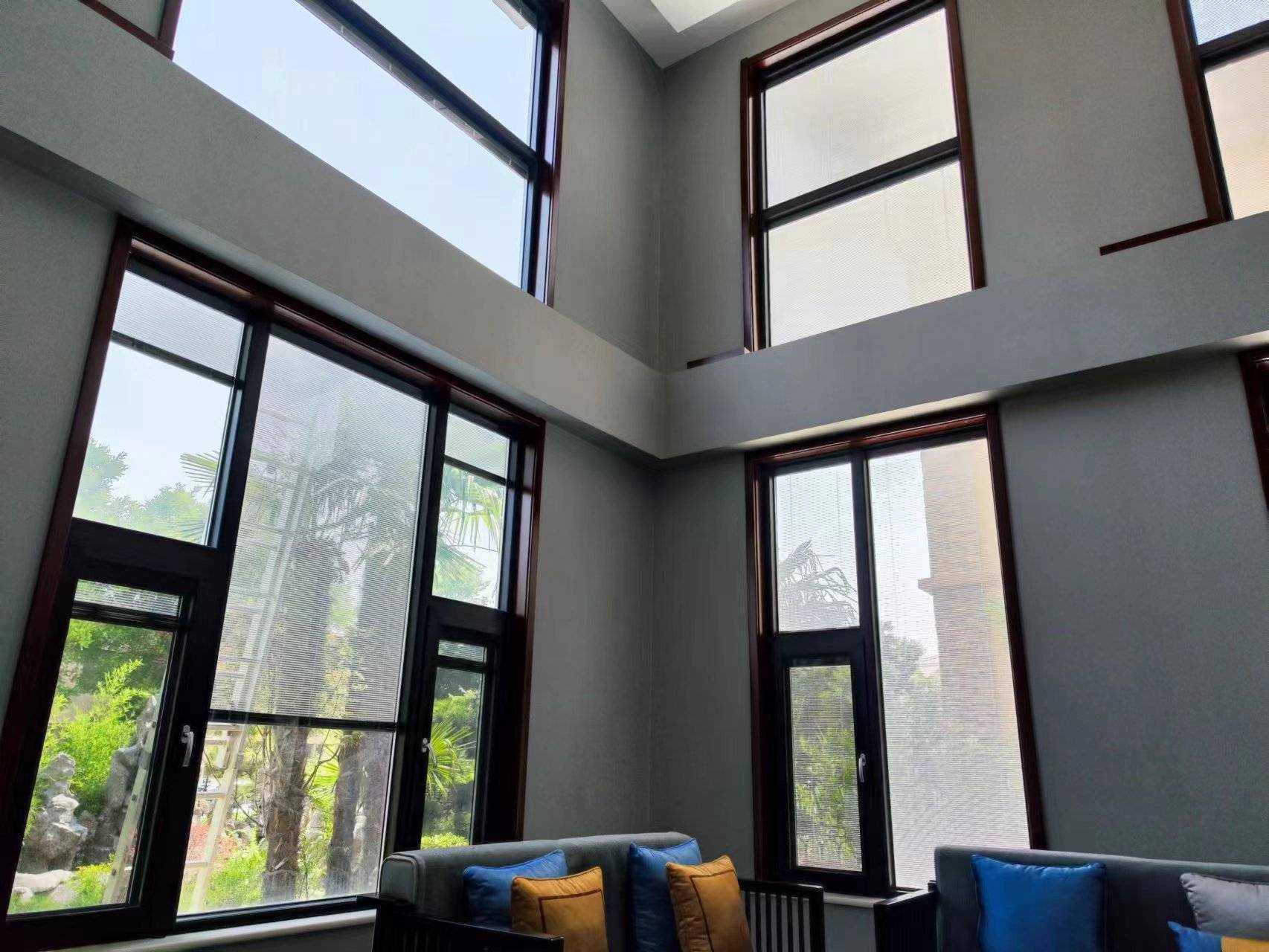
What is the FG110F Double Inward-Opening Break-Through Window?What core needs is it designed for?
Basic Product Definition and Core Configuration Analysis
The FG110F Double Inward-Opening Break-Through Window is an aluminum alloy window product from the Hyperstron brand. Its original English name is "FG110F Double inward-opening break-through window".
The core configuration parameters of this product are as follows, providing a reference basis for its performance:
| Configuration Item | Reference Value | Reference Significance |
| Profile Material | 6063-T5 Aluminum Alloy | It possesses good mechanical properties and corrosion resistance, making it a common material for building doors and windows. |
| Profile Thickness | 2.0MM | It provides sufficient structural strength for the window frame to support the window size and glass weight. |
| Glass Configuration | 5+27A+5 | Refers to two 5mm thick glass panes with a 27mm aluminum spacer layer in between, forming an insulated glass unit, which helps improve thermal insulation and soundproofing performance. |
What core problem does its 'dual inward-opening thermal break' structure primarily solve?
The 'dual inward-opening thermal break' design primarily addresses the following core needs:
- Thermal InsulationThe 'thermal break' structure effectively blocks heat conduction through the metal window frame by incorporating thermal break strips within the aluminum alloy profile, helping to reduce indoor temperature loss and adapting to projects with building energy efficiency requirements.
- Safety and Maintenance'Dual inward-opening' means both window sashes open towards the interior.This design avoids the potential high-altitude safety hazards of outward-hanging sashes, while the sash opens on the interior side, making it more convenient for cleaning and maintenance.
- Sealing Performance: With the inward-opening structure, when closed, the sash can typically be pressed more evenly against the sealing gasket, thereby achieving better air and water tightness performance, suitable for residential or commercial environments with sealing requirements.
In summary, the FG110F double inward-opening thermal break window is a product designed for those who need to balancethermal insulation, safety maintenance, and basic sealing performancein their aluminum window requirements for a project.
Is this window suitable for my project?First, match these three typical scenarios
Based on the product's positioning as "aluminum alloy window projects requiring thermal insulation, sealing, and inward-opening structures," the following scenarios have a high degree of match with the product's characteristics.
Scenario 1: Residential window configurations with clear requirements for thermal insulation and sealing
Core User NeedsReplacing windows in a home residence, with a focus on energy-saving insulation and air-tightness, while also being accustomed to or requiring inward-opening windows for easy cleaning and safe operation. Product Adaptation PointsThe thermal break structure and sealing design of the FG110F are intended to meet the needs for thermal insulation and sealing. Its inward-opening structure aligns with residential habits for ease of cleaning and use.
Before purchasing, it is necessary to confirm whether the window opening dimensions and the space for opening are compatible.
Scenario 2: Project Procurement Focusing on the Convenience of Inward-Opening Structures
Core User NeedsBulk procurement for projects (e.g., commercial buildings), where the design explicitly requires inward-opening window types and needs stable supply and quality assurance. Product Adaptation PointsThe product supports bulk orders. Its profile (referencing a wall thickness of 2.0MM) and structural design are suitable for the general requirements of projects regarding durability and performance.
Before procurement, it is necessary to confirm bulk production capacity, technical coordination, and delivery schedule with the supplier.
Scenario 3: OEM/ODM Customized Cooperation
Core User NeedsBrand owners or distributors need to apply their branding or make partial customizations (e.g., adjusting wall thickness, glass configuration) based on existing products for their own channels. Product Adaptation PointsThe product supports customization needs for different wall thicknesses and glass configurations, suitable for sample confirmation and bulk orders. Specific cooperation terms need to be discussed in depth with the supplier.
Please notethat for scenarios where only the lowest cost is pursued, with no requirements for insulation or sealing performance, or where the project is still in the conceptual stage with unstable demands, this product may not be the first choice. It is recommended to confirm core requirements and site conditions before proceeding with model selection.
What on-site information must you clarify yourself before consulting the supplier?
Before consulting the supplier for product solutions, clear on-site information is the foundation for obtaining accurate quotations and feasible solutions. Especially for products like the FG110F double inward-opening broken bridge window, which support customization based on drawings and allow adjustments to glass configuration and wall thickness, the more thoroughly the preliminary information is prepared, the higher the subsequent communication efficiency will be, and it can also avoid solution deviations caused by information gaps.
The following are the two core aspects you need to confirm yourself:
Dimensions and structural conditions that must be confirmed
1. Precise opening dimensions You need to measure not only the net width and net height of the opening, but also pay attention to the diagonal length. The ideal installation method is 'install the frame first, then build the wall' or an opening with sufficient reserved installation gaps. Please provide the net dimensions of the opening (i.e., the structural dimensions before wall plastering), and indicate the wall material (e.g., concrete, blocks, etc.).
For products like the FG110F, the opening dimensions directly determine the manufacturing dimensions of the window frame and the installation plan. A common misconception is to place an order directly using the dimensions after plastering, which may lead to insufficient installation gaps, affecting sealing and aesthetics.
2. Connection method between the window and the wall This relates to the fixing and waterproofing treatment of the window frame. You need to clarify: Is the window directly fixed to the wall structure using expansion bolts, or are embedded parts required? Has the wall reserved space for installing a steel sub-frame?
Different fixing methods will affect the choice of profile structure for the window frame and the installation process.
3. Structure of the windowsill and window lintel Is there a ready-made windowsill board? Does the window lintel need a drip line? These details affect the waterproofing design of the window's lower and upper edges.
If the site involves wet-laid stone or tile sills, should this be completed before or after the window installation? This requires advance planning of the work sequence.
Clear performance and environmental requirements are needed.
1. Core Performance Indicators You need to translate the project requirements into specific product specifications. For example:
- Thermal insulation requirementsWhat is the climate like in the project's location?Are there specific performance requirements for thermal insulation (e.g., heat transfer coefficient K-value)?This determines the selection of the FG110F profile series and whether a superior thermal break configuration is needed.
- Water and Air Tightness RequirementsWhat are the requirements for the building's environment (e.g., coastal, rainy areas) regarding the waterproof and wind pressure resistance of doors and windows?This directly relates to the cavity structure design of the profile and the specifications of the sealing strips.
2. Glass Configuration "5+27A+5" is a reference configuration for the FG110F, but your project may differ. You need to clarify:
- Basic TypeDo you need insulated glass?Do you need Low-E coating for energy efficiency?
- Functional UpgradesAre there any special requirements for sound insulation, UV protection, etc.?These will affect the glass thickness combination (e.g., 5+12A+5+12A+5 double insulated) or coating selection.
3. Opening and Handle Method The FG110F features a "dual inward-opening" structure, but you also need to confirm: the number and location plan for the opening sashes of each window? For the handle, do you choose a single-point lock or a multi-point lock system? This not only concerns ease of use but also affects the cost of the hardware and the configuration of the solution.
How does this information affect the final solution and quotation?
The more specific the information you provide, the more precise the solution offered by the supplier will be. For example, if the requirement for "K-value ≤ 2.0" is clearly specified, the supplier will recommend the profile and glass combination with the best thermal insulation performance within the FG110F Series, and may suggest adjusting the wall thickness to meet strength requirements. Conversely, if you only say "want good insulation," the solution may be rather vague, which can easily lead to disputes later.
With the above information prepared, you can more effectively consult suppliers and evaluate whether the FG110F solution they provide truly meets your project needs.
After confirming the information, what is the next step for evaluating the solution and avoiding risks?
After collecting the opening dimensions, performance requirements, and installation conditions, determining whether the FG110F double inward-opening broken bridge window is applicable hinges on matching the objective parameters with your specific project. Here are three evaluation steps and key risk boundaries.
Three-Step Solution Evaluation: From Parameters to Trade-offs
Step One: Verify Core Parameter Compatibility Perform an initial comparison between your confirmed dimensions and the product's reference dimensions (1000*1000mm). As a standard window type, the FG110F's performance (such as thermal insulation and sealing) is closely linked to its standard configuration (e.g., 2.0mm wall thickness profile, 5+27A+5 glass). If your opening dimensions are close to or smaller than the reference dimensions, and your performance requirements align with typical residential or office scenarios, it is a high-probability matching option.
If the size difference is too large, you need to confirm whether customization is supported and its impact on performance.
Step 2: Weigh the Trade-offs You need to clarify the priorities of your project. For example, choosing a 'double inward-opening' structure means gaining excellent sealing and security, but you must accept that the window sash will occupy interior space when opened. This has a direct impact on furniture placement, curtain installation, or escape route planning.
Please evaluate: Can your project accommodate this spatial trade-off?
Step 3: Clarify Key Points for Supplier Communication When communicating with the current website team, do not repeat generic questions. Based on the information you already have, directly confirm: "I need an FG110F window of XX size. To meet XX performance requirements (such as thermal insulation or wind pressure resistance), does the profile wall thickness need to be adjusted to above 2.0mm?" Can the glass configuration be optimized?
”
Risk boundaries: In which situations should the plan be upgraded or adjusted?
When project requirements exceed the standard capabilities and conventional customization range of the FG110F, it means increased risk, and more complex solutions should be considered:
- Size and structural risks: If the opening size is significantly larger than the reference size (for example, a single sash width far exceeds 1.2 meters), or if it is a non-standard, irregular structure.This concerns not only whether it can be produced, but also transportation, installation strength, and long-term stability of use.You need to confirm with the supplier whether there is a corresponding reinforcement plan or if switching to another high-load-bearing series is necessary.
- Extreme Performance RequirementsThe project is located in high-altitude, coastal strong typhoon, or extremely cold regions, with stringent requirements for air tightness, water tightness, or thermal insulation performance that far exceed ordinary residential standards.This may exceed the capabilities of the standard configuration.
- Complex System IntegrationThe project requires deep integration of the window type with other complex curtain wall systems, smart window opening, or special shading systems.As a standardized window product, the FG110F may have limited compatibility and design freedom in this scenario.
- Balancing Budget and ComplexityIf meeting a non-standard requirement necessitates adding significant customization costs to the standard product, and this cost approaches or even exceeds that of a more specialized window system originally designed for such a scenario, the latter may be a more economical and reliable choice.
Next Steps Checklist Please quickly self-check the following questions. A 'no' answer to any of them indicates a need for a more in-depth discussion with the current website team:
- Verify Dimensions: Is my project's opening size within the range supported by the FG110F?
- Clarify Performance: Are my core requirements for insulation and sealing addressed by the standard configuration of this product?
- Confirm Installation: Are the on-site installation conditions (e.g., wall thickness, corner treatment) feasible?
- Accept Trade-offs: Can my project design accommodate the space occupied by the opening of the dual inward-opening sashes?
- Budget Alignment: Does my budget primarily cover the window unit itself, or do I need to reserve a large amount for special customization costs?
- Special Requirements: Does my project have any special codes or integration needs beyond standard residential or commercial buildings?
Frequently Asked Questions
1. Can the FG110F be fully customized according to my drawings? This product supports adjustments to different wall thicknesses and glass configurations based on the standard series. For non-standard dimensions or complex structures, you need to submit your specific drawings to the current website team for a technical assessment to confirm feasibility and performance assurance.
2. The project has particularly high insulation requirements. Is a 2.0mm wall thickness sufficient? Profile wall thickness is one of the factors affecting window strength and insulation performance, but it is not the only key selection factor. The thermal break structure, thermal break strip material, and glass configuration (such as Low-E coating, inert gas filling) collectively determine the final performance.
Please inform the supplier of the specific insulation indicators (such as K-value requirements), and they will recommend the most suitable profile wall thickness and glass combination.
3. After installation, I found the inward-opening sash hits the wall corner. Is this a product issue? This is typically an issue that needs to be avoided during the installation condition confirmation stage. Double inward-opening windows require sufficient rotation space.
When confirming the plan, you must verify whether the wall or obstacles on the side of the opening have left enough clearance for the sash to open fully.
4. Can I place an order directly on the current website? Yes, but to ensure the plan is foolproof, it is recommended that you first use the collected information to have a quick confirmation with the customer service or technical consultants of the current website team. Inform them of your dimensions, performance requirements, and site conditions. It will be more secure to proceed with the procurement process after obtaining a clear matching plan.
Learn more
If you are unsure about the target, the intended user, existing materials, or subsequent maintenance methods, it is recommended to confirm this information first before determining whether the FG110F double inward-opening thermal break window is suitable.
Related products:FG110F double inward-opening thermal break window