
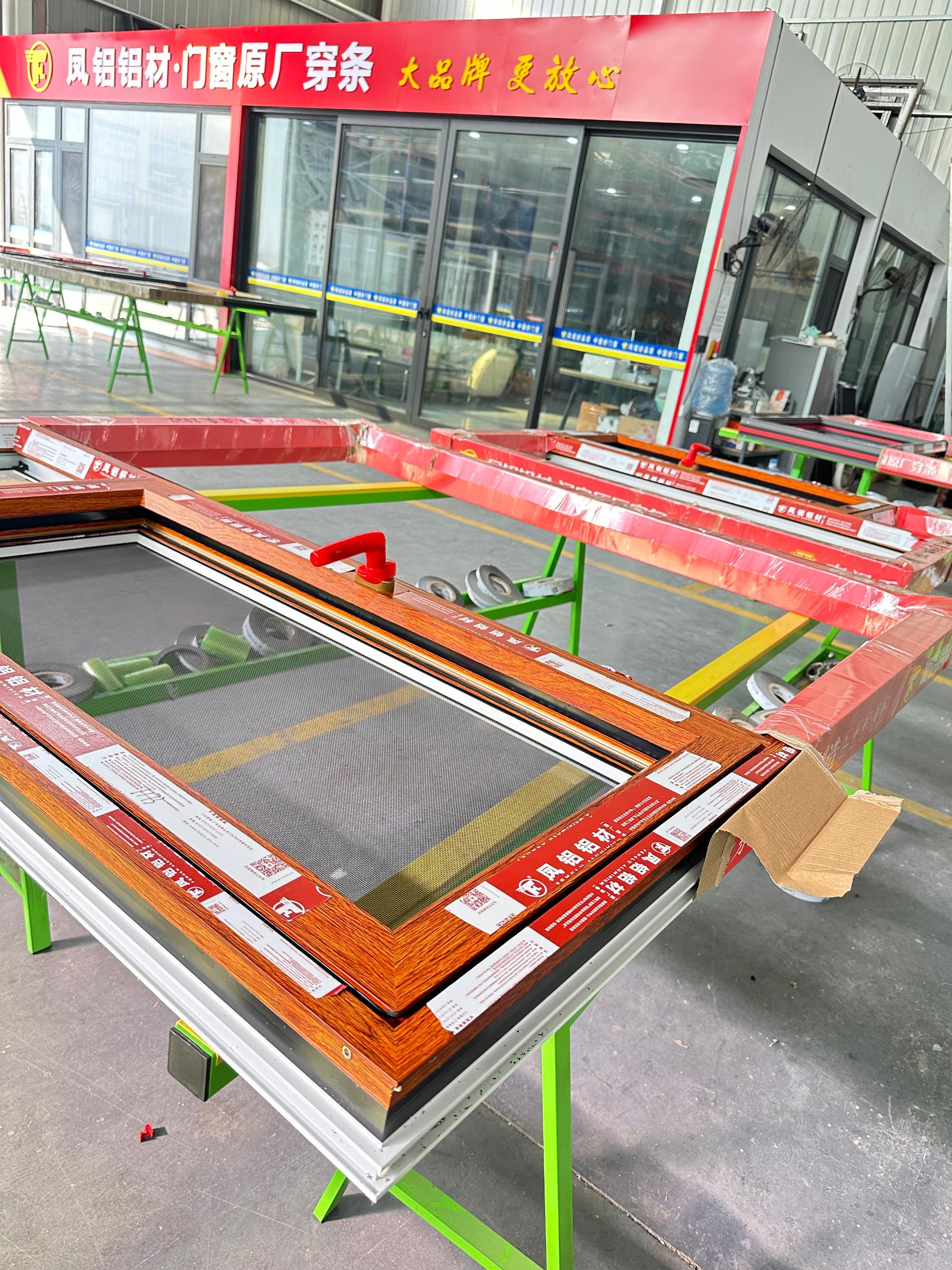
What is 5+22A+5 insulating glass?Decoding the meaning behind the numbers
5mm glass + 22mm air layer: what each number represents
"5+22A+5" is a common glass structure notation on door and window configuration sheets, which can be broken down into three parts:
- The first "5": the thickness of the outer glass, 5mm, in direct contact with the outdoor environment.
- "22A": the thickness of the middle air layer, 22mm.The letter "A" stands for Air, referring to the sealed spacer cavity between the two panes of glass.
- The second "5": the thickness of the inner glass pane, 5mm, facing the interior.
Together, this means:5mm glass + 22mm air layer + 5mm glass, with a total thickness of approximately 32mm (excluding the frame profile). This structure is a type of insulated glass, and is one of the reference configurations for the 80 Series thickened single-leaf aluminum window, which uses 6063-T5 aluminum alloy with a wall thickness of 1.8mm.
How insulated glass achieves sound insulation and thermal insulation
The basic principle of insulating glass is to use a sealed air layer to cut off the continuous transmission path of heat and sound.
- In terms of thermal insulation: Glass itself conducts heat relatively quickly, while the thermal conductivity of air is significantly lower than that of glass.A 22mm air layer is equivalent to adding a thermal barrier between indoors and outdoors, reducing heat loss from indoors in winter and slowing heat transfer from outdoors in summer.The thicker the air layer, the greater the thermal resistance, but beyond a certain thickness, the benefit diminishes; 22mm is a common choice.
- In terms of sound insulation: Sound from outdoors to indoors must pass through the outer glass, the air layer, and the inner glass in sequence.Each layer interface reflects part of the sound energy, and the air layer causes sound waves to attenuate during propagation.Compared with single-pane glass, the insulating glass structure has a weakening effect on mid-to-high frequency noise (such as traffic sounds and human voices);However, its ability to isolate low-frequency noise (such as the roar of heavy vehicles) is limited. For projects adjacent to streets or near tracks, it is necessary to evaluate whether to upgrade the glass configuration.
What scenarios are suitable for the 5+22A+5 glass configuration?In which cases is it not recommended to choose it?
To determine whether this configuration is suitable for you, the key is to consider two things:How high your actual needs are for sound insulation and thermal insulation,andhow much cost you are willing to pay for these two performances.5+22A+5 refers to two 5mm glass panes with a 22mm air layer in between. The thicker the air layer, the better the sound insulation and thermal insulation performance usually is, but the cost also increases accordingly.
Suitable for: noise-sensitive environments such as street-facing residences, bedrooms, and street-front shops
If your home or project faces a road, elevated highway, or subway line, or if there is a commercial street downstairs, 5+22A+5 is a configuration worth prioritizing. The 22mm air layer has a good attenuation effect on mid-to-high frequency noise (such as traffic sounds, voices, and horns). Compared to ordinary 5+9A or 5+12A configurations, the sound insulation performance is significantly improved. Rooms with high requirements for quietness, such as bedrooms and studies, are also suitable for this configuration.
Suitable for: rooms with thermal insulation requirements in cold or hot regions
In regions with cold winters or hot summers, windows are the main channels for heat loss and heat gain. The thick air layer of 5+22A+5 can effectively reduce heat conduction. Combined with the thermal break design of aluminum alloy profiles, it can reduce the energy consumption of air conditioning and heating. If your region experiences large temperature differences between winter and summer, or if the room faces west or north and is exposed to wind for long periods, this configuration can help you save on energy costs over the long term.
In which cases is it not recommended to choose it?
Limited budget and no prominent noise or insulation issues—If your project is located in a quiet neighborhood, on a non-street-facing floor, or in a mild climate, the performance advantages of 5+22A+5 may not be fully utilized. In such cases, choosing 5+12A or 5+9A is sufficient, and there is no need to pay for performance you won't use.
Large window area with frequent opening and closing—5+22A+5 glass is heavier and places higher demands on hinges and hardware. If the window sash is large (over 1.5 square meters), frequent opening and closing over time may accelerate hardware wear. In such cases, it is necessary to confirm whether the profile wall thickness and hardware load-bearing capacity match. It is recommended to provide the specific window dimensions to the current website team and confirm the load-bearing solution before making a decision.
Extreme requirements for sound insulation—If your home is close to an airport, train station, or highway, 5+22A+5 may not be enough. Such scenarios typically require laminated glass or a double-glazed combination. If you fall into this category, it is recommended to inform the current website team about the type and distance of the noise source to confirm whether an upgraded glass solution is necessary.
Next step: confirm the action: Based on your project's location (whether it faces the street), regional climate, window size, and budget, first prioritize your needs. If noise and insulation are the main pain points, this configuration is worth choosing;if neither is a core requirement, opting for a thinner air layer configuration will suffice. When in doubt, send the window dimensions and installation location to the current website team to have them verify whether the load-bearing and sealing solutions match.
Is a thicker air layer always better for sound insulation?3 Common Misconceptions About Insulating Glass
Misconception 1: A thicker air layer always means better sound insulation.
This is the most easily misunderstood point. The sound insulation principle of insulating glass is that the air layer itself acts as an elastic layer, weakening the vibration transmission when sound waves pass through the glass. However, the relationship between air layer thickness and sound insulation performance is not linearly proportional—beyond a certain range, continuing to thicken the air layer will cause the improvement in sound insulation to slow down significantly, and may even weaken the sound insulation performance in specific frequency bands due to the formation of acoustic bridges or resonance effects within the air layer.
Taking the reference configuration 5+22A+5 of this product as an example, 22A (22mm air layer) is already a relatively wide insulating glass design. Under typical residential noise environments (traffic noise, human voices, community ambient sounds), its sound insulation performance is sufficient to cover the vast majority of usage scenarios. What truly affects the upper limit of sound insulation is often not a few more millimeters of air layer thickness, but rather the thickness of the glass itself, whether laminated glass configuration is used, and the sealing craftsmanship between the window frame and the wall. If you are facing extreme noise sources such as elevated roads or airport flight paths, simply thickening the air layer is not as effective as considering laminated glass or double-window solutions—this needs to be determined based on the specific noise frequency and on-site conditions. It is recommended to provide the type and distance of the noise source to the current website team to confirm the matching solution.
Misconception 2: Thicker glass always means better insulation.
The impact of glass thickness on insulation is far less than the gas filling and sealing quality of the air gap. The insulation core of insulating glass lies in the air layer (or inert gas layer) blocking heat conduction, not in the glass itself being thicker for better insulation. In the 5+22A+5 configuration, it is the 22mm air layer that truly provides insulation, not the 5mm glass on each side.
If you seek higher insulation performance, the key variables are: whether argon gas is filled, whether low-emissivity (Low-E) coating is used, and the aging lifespan of the sealing strips. Increasing glass thickness from 5mm to 6mm has almost negligible improvement on insulation, but both cost and profile load-bearing requirements will rise. For projects in cold winter regions or those sensitive to air conditioning energy consumption, the priority is to confirm Low-E coating and argon gas filling options, rather than obsessing over glass thickness.
Misconception 3: Insulated glass and vacuum glass are the same thing
The two have similar names, but their principles and performance differ greatly. Between the two panes of insulated glass is an air layer (or inert gas), which insulates through the low thermal conductivity of the gas;Vacuum glass, on the other hand, removes the air between the two panes to form a nearly vacuum thin layer, theoretically offering stronger sound insulation and thermal performance, but at higher cost, with complex processes, extremely stringent sealing requirements, and once the seal fails, performance degrades rapidly.
For the residential, engineering, and distribution channel projects targeted by this product, insulated glass is a mature, stable, and cost-effective mainstream choice. Vacuum glass is more often used in projects with special performance requirements and requires specialized profile coordination and installation techniques. If your project is indeed evaluating vacuum glass, it should be clear that it is not suitable for all window types and has higher requirements for the installation environment—this is a configuration solution that needs separate confirmation. It is recommended to communicate the project requirements directly with the current website team to confirm profile compatibility and supply conditions.
Key points for judgmentWhen selecting glass configuration, first clarify whether your core need is sound insulation or thermal insulation, then confirm the type of noise source and climate zone, and only then look at the air layer and glass thickness. 5+22A+5 is a balanced standard configuration, suitable for most residential and commercial projects;If your needs are more extreme, what you need is an upgrade in configuration rather than simply thickening a single parameter.
How to determine whether you need the 5+22A+5 configuration? Three-step decision method
5+22A+5 is not suitable for all projects. There is only one criterion:Whether your installation environment has both noise and thermal insulation issues. Following the three steps below will lead to a clear conclusion.
Step 1: Assess the noise environment and floor location
First, answer two questions:
- Is the bedroom or main activity space facing a continuous noise source such as a road, school, or square?
- Is the floor above the 10th floor and unobstructed?
If both answers are 'yes', the 22mm air layer of 5+22A+5 has an attenuation effect on mid-to-high frequency noise and is worth considering. If only one answer is 'yes', first confirm whether the noise really affects rest—occasionally hearing car sounds and being unable to sleep all night are two different things. If both answers are 'no',Skip this configuration directly, 5+12A+5 or 5+9A+5 is sufficient, and the budget saved is better spent on profile wall thickness or hardware.
Step 2: Clarify insulation needs and climate conditions
This step depends on temperature differences, not how it feels. Check the difference between the lowest winter temperature and the highest summer temperature in your area:
- If the temperature difference exceeds 40°C (e.g., severe cold northern regions): a 22mm air layer can reduce thermal bridge effects, preventing condensation near windows in winter, making it worth the investment.
- If the temperature difference is 25-40°C (e.g., central regions): the insulation advantage of 5+22A+5 is not obvious, and unless you also have underfloor heating or run air conditioning long-term, there is no need to choose it.
- If the temperature difference is below 25°C (e.g., southern coastal areas): insulation is not the main concern,Prioritize insulation and wind pressure resistance, this configuration is a waste for you.
Step 3: Weigh budget and project scale
When the budget only allows choosing one, remember this priority:Profile wall thickness > glass configuration > hardware brand.
The 1.8mm profile of the 80 Series thickened single-opening window determines structural strength and service life; glass configuration can be replaced later, but the profile cannot. In scenarios with high wind pressure or high floors, first spend the budget on 1.8mm wall thickness, and use 5+12A+5 glass;Only when noise is the main issue and the floor is low with low wind pressure, prioritize 5+22A+5.
In addition, the 80 Series supports different wall thicknesses and glass configurations, suitable for sample confirmation and batch orders. If the requirements are not clear, it is recommended to first communicate the working conditions with the Qinhan System Doors and Windows team before confirming the solution.
Conclusion boundary: 5+22A+5 is suitable for scenarios with 'noise sensitivity + large temperature differences'. If you have only one-sided requirements, or the window area exceeds 1.5 square meters (the self-weight of large glass increases the burden on the frame), this configuration is not the optimal solution. When in doubt, send your floor, orientation, window opening dimensions, and city to the manufacturer, and let them confirm the matching solution based on the actual frame structure of the 80 Series.
Frequently Asked Questions
Question: How much more expensive is 5+22A+5 compared to 5+12A+5? Is it worth the extra money? The extra cost mainly comes from the profile groove adjustments and glass processing costs brought about by the widened air layer.
If both your noise and temperature difference conditions are met, it is worth it;if only one is met, it is not recommended to spend the extra money.
Question: My home is in a high-rise building. Will 5+22A+5 be too heavy and cause the window to sag? This depends on the area of a single sash. Around 1 square meter is fine, but if it exceeds 1.5 square meters, you need to confirm the profile's reinforcement bar configuration and hinge load-bearing capacity.
Before placing the order, provide the actual dimensions to the manufacturer and have them calculate based on the load-bearing range of the 80 Series.
Q: Can this configuration be used in bathrooms or kitchens? Not recommended. These spaces have greater ventilation needs than sound and thermal insulation. The 22mm air layer makes the window heavier and harder to open. 5+9A+5 is more practical.
Q: Is 5+22A+5 suitable for coastal high-salt environments? It is suitable, but the reason lies not in the glass but in the profile. The corrosion resistance of 6063-T5 aluminum alloy is the key. The glass configuration can be selected based on noise and temperature difference requirements; there is no need to deliberately thicken the air layer for coastal environments.
Learn More
If you are unsure about the target, intended users, existing materials, or future maintenance methods, it is recommended to confirm these details first, and then determine whether the 80 Series thickened single-opening aluminum window is suitable.
Related Products:80 Series Thickened Single-Hung Aluminum Alloy Window