
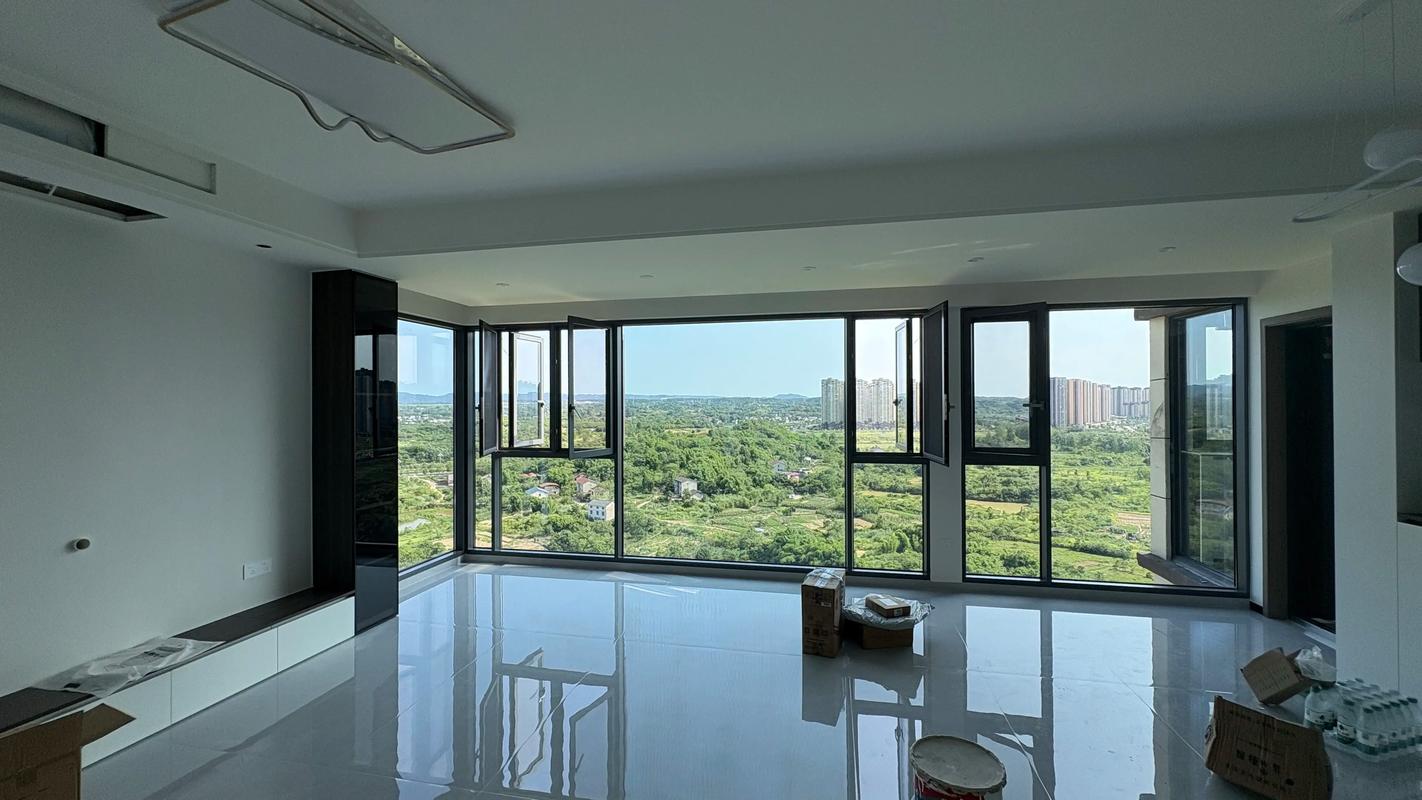
What are the cost components of the FG110F double inward-opening thermal break window?Why is there such a large price difference?
When purchasing the FG110F double inward-opening thermal break window, quotes can range from a few hundred to over a thousand yuan per square meter. The difference is not due to brand premium, but rather four core costs—profiles, glass, hardware, and sealing systems—each with clear specification thresholds. Only by understanding the pricing logic of these four components can you determine whether a quote is 'reasonably configured' or 'low-priced with reduced specifications.'
Profiles, Glass, Hardware, and Sealing: Breakdown of Four Core Costs
Profiles: Wall thickness and alloy grade determine the base cost. The FG110F uses 6063-T5 aluminum alloy with a reference wall thickness of 2.0mm. The wall thickness is increased from 1.4mm to 2.0mm, and the profile usage increases by about 40%. This cost is directly reflected in the unit price.
6063-T5 is a common grade for architectural aluminum profiles and is not a premium factor by itself, but insufficient wall thickness directly affects the structural strength and wind pressure resistance of the window. When purchasing, be sure to confirm the wall thickness indicated on the quotation, rather than just looking at the words "broken bridge aluminum".
Glass: accounts for 30%-45% of the total window cost, making it the largest single variable. The reference configuration is 5+27A+5 insulating glass, which is two 5mm glass panes with a 27mm air layer. Glass costs vary greatly with configuration: the price difference between ordinary clear glass, Low-E coated glass, triple-glazed with two cavities, and laminated glass can be 2-3 times.
If your project is located in a street-facing or cold area, Low-E or triple-glazed configuration is a necessary performance investment;If you do not have high requirements for sound and thermal insulation, basic insulating glass can meet your needs, and you do not need to pay for performance you will not use.
Hardware: the core cost of the double inward-opening structure, and also the part most likely to be "tampered with" in low-price quotes. Double inward opening means each window requires two complete sets of opening hardware—hinges, locking points, transmission gears, and handles. The price difference between a mid-range domestic hardware set and an imported brand hardware set may be 200-500 yuan per set, and for one window with two sets, that's a difference of 400-1000 yuan.
Hardware directly determines the opening and closing feel and service life. It is not recommended to cut the budget here, because the construction cost of replacing hardware later is much higher than the initial price difference.
Sealing system: gasket material and equal-pressure cavity design. The weather resistance and service life of EPDM gaskets differ significantly from ordinary PVC gaskets. The cost difference is only a few yuan per meter, which accounts for a small proportion of the whole window, but it affects long-term sealing performance. The width of the thermal break strip (e.g., 14.8mm, 24mm, 34mm) also affects thermal insulation performance and cost. The wider the strip, the higher the difficulty of profile processing and material cost.
Reference configuration and cost relationship of FG110F double inward-opening thermal break window
Using the reference configuration of FG110F (2.0mm wall thickness, 5+27A+5 insulating glass, dual inward-opening hardware) as a baseline, a simple cost judgment framework can be established:
| Cost Item | Reference Configuration | Downgrade Direction (Save Money) | Upgrade Direction (Add Money) |
| Profile Wall Thickness | 2.0mm | Reduce to 1.6mm or 1.4mm | Keep 2.0mm or higher |
| Glass | 5+27A+5 insulated | Ordinary clear glass, reduce air layer | Low-E, triple glazing with two cavities, laminated |
| Hardware | Standard hardware for double inward opening | Brand downgrade | Imported brands, multi-point locking |
| Sealing | EPDM rubber strip + standard thermal break strip | PVC rubber strip | Widened thermal break strip, composite rubber strip |
Why do quotes vary significantly among different suppliers? There are three core reasons: first, whether the wall thickness and glass configuration are fully configured according to the reference standards; low-price quotes often downgrade the glass brand or profile wall thickness.Second, the hardware brands and series differ, which is the most hidden part of the quote differences.Third, the cost of profile surface treatment processes (powder coating, anodizing, fluorocarbon spraying) increases progressively, with fluorocarbon spraying being about 30%-50% more expensive than powder coating. Additionally, the minimum order quantity for bulk purchases, whether installation is included, and whether transportation and packaging are included can also lead to price differences of tens to hundreds of yuan per square meter.
Next confirmation steps: After receiving the quotation, check the four configurations item by item: wall thickness, glass structure (including glass brand), hardware brand and model, and gasket material. If the quotation only states "thermally broken aluminum window" without itemized details, require the supplier to break down the quotation according to these four items. For the specific configuration combinations and bulk pricing of the FG110F, directly confirm with the Haipai Sichuang team, specifying your project type, local climate conditions, and purchase quantity, and they will provide corresponding configuration recommendations and quotation plans.
When the budget is limited, which deserves higher priority investment: profile wall thickness or glass configuration?
Let's start with the conclusion:When the budget is limited, glass configuration takes priority over investment in profile wall thickness. This is not to say that wall thickness is unimportant, but rather that the performance leverage of the two is completely different.
Applicability assessment of 2.0mm profile wall thickness in most projects
The 2.0mm wall thickness of FG110F is at the upper mainstream level for thermally broken aluminum windows. For conventional residential and commercial projects—buildings no more than 20 stories, window sizes within 1.5㎡, and non-typhoon-prone areas—a 2.0mm wall thickness is fully sufficient in terms of structural strength. Its significance lies in ensuring that the sash does not deform or sag during long-term use, and in providing a stable installation base for hardware.
Scenarios that truly require upgraded wall thickness are: oversized panels (single sash exceeding 2㎡), high-rise wind pressure zones, or coastal typhoon areas. In these cases, 2.0mm may not be sufficient, and you need to confirm with the Haipaisi Chuang team whether thickened profile customization is supported. But if you are working on ordinary residential or standard commercial projects, wall thickness is not the bottleneck in your budget.
The decisive impact of glass configuration on thermal and acoustic insulation performance
Glass accounts for 70%-80% of the entire window area, and it is the main channel for heat transfer and noise transmission. The FG110F reference configuration is 5+27A+5 insulating glass, which itself can already meet most thermal insulation and sound insulation needs. But if you face the following situations, the benefits of upgrading glass far outweigh those of upgrading wall thickness:
- Near a street or highway: Noise issues are almost entirely solved by glass. Switching to laminated insulating glass or glass with unequal thickness will bring a qualitative improvement in sound insulation, while increasing wall thickness from 2.0 to 2.5 does nothing to help.
- West-facing exposure or cold regions: Increasing the air gap from 9A to 12A or 15A, or upgrading to Low-E glass, significantly improves the U-value.The thermal break profile has already cut the thermal bridge in the aluminum frame; glass is the main source of remaining heat loss.
A simple allocation principle: If the budget only allows for one of the two, invest the saved money in upgrading the glass rather than increasing the profile thickness from 2.0mm to 2.5mm. Wall thickness is a 'good enough' indicator, while glass is a 'the better, the better' indicator.
Next confirmation steps: Specify your project's region, floor height, maximum window grid size, and whether it faces the street—provide these four conditions to the Hipeisichuang team, and let them propose a matching glass configuration based on the FG110F's 2.0mm wall thickness. If the project has special wind pressure requirements, confirm separately whether the wall thickness needs adjustment.
Which projects are suitable for choosing the FG110F double inward-opening thermal break window?In which situations is it not recommended to downgrade specifications to save costs?
Analysis of suitability for residential communities, street-facing residences, and cold northern regions
The FG110F double inward-opening thermal break window is suitable for projects with clear requirements for thermal insulation, sealing, and inward-opening structures. The following scenarios can be given priority:
- Residential community projects: The double inward-opening structure facilitates unified installation and later maintenance, making it suitable for bulk procurement of standard floor heights and conventional window types.The reference configuration (2.0mm profile wall thickness, 5+27A+5 insulating glass) can be directly applied, reducing the cost of solution adjustments.
- Street-facing residences: 5+27A+5 insulating glass has a practical attenuation effect on mid-to-high frequency traffic noise and can serve as the starting configuration for a soundproofing solution.If noise sensitivity is high, it is necessary to confirm whether to upgrade the glass configuration, rather than assuming this configuration can meet all soundproofing needs by default.
- Cold northern regions: The thermal break structure combined with insulating glass helps reduce indoor-outdoor heat exchange in winter, making it suitable for projects with long periods of low winter temperatures and insulation requirements.Specific energy-saving indicators need to be confirmed based on local building acceptance standards.
Scenarios where downgrading is not recommended: high-rise buildings, areas with high wind pressure, or projects with strict soundproofing requirements
In the following situations, it is not recommended to lower the configuration to control costs:
- High-rise or high wind pressure areas: A 2.0mm wall thickness is a reference configuration, but high-rise buildings have higher requirements for wind load, wind pressure resistance rating, and hardware load-bearing capacity.For typhoon-prone areas or super high-rise projects, it is necessary to confirm with the manufacturer first whether this series meets the specific wind pressure resistance classification, rather than directly reducing the configuration.
- Projects with strict acoustic insulation requirements: If the contract specifies a specific decibel value or sound insulation rating, 5+27A+5 is only a basic configuration and may not meet the standard.The target sound insulation value should be confirmed first, and then it should be assessed whether an upgrade to laminated insulating glass or unequal-thickness glass is needed, rather than directly cutting performance to save budget.
- Stage where requirements are not yet defined: If the final window type, opening method, or glass thickness is not yet determined, it is not recommended to lock in the configuration in advance.Once the double inward-opening structure is finalized, the cost of later modifications is relatively high.
Budget boundary: FG110F is suitable for projects with clear performance requirements, conventional window types, and non-extreme installation environments. If the project involves the above high-risk scenarios, it is recommended to first organize the floor height, regional wind pressure, and sound insulation target values, confirm the matching solution with the manufacturer, and then decide whether to reduce the configuration.
How can customization and sample confirmation avoid unnecessary cost waste in bulk procurement?
In bulk procurement of thermal break windows, the biggest cost risk is often not the unit price itself, but 'making mistakes and then reworking'. The FG110F double inward-opening thermal break window supports customization according to drawings, but customization does not mean 'just send the drawings over'—whether the information on the drawings is complete and whether both parties have a consistent understanding of the specifications directly determine whether rework costs will be incurred later.
When customizing according to drawings, how to lock in specifications to avoid rework
The FG110F double inward-opening thermal break window uses 6063-T5 aluminum alloy profiles with a reference wall thickness of 2.0mm, but this is only a baseline configuration. In actual projects, what you need to confirm is not just "how thick the profile is," but whether the following four items are clearly specified in both the drawings and the order:
- Profile wall thickness and series: Wall thickness affects strength and cost.If the project has wind pressure requirements, the wall thickness may need to be increased;If it is just an ordinary residential building, 2.0mm may be sufficient.This judgment needs to be based on the wind pressure zone and floor height of the project location, not decided arbitrarily.
- Glass configuration: The reference configuration is 5+27A+5 insulating glass, but for street-facing residences, thicker glass or a laminated layer may be needed, and for cold northern regions, Low-E coating may be required.Different glass configurations lead to significant price differences, so they must be clearly marked on the drawings rather than agreed upon verbally.
- Opening method and hardware: The FG110F features a double inward-opening structure, but inward-opening with inward tilting, inward-opening single sash, and hardware brand grades all affect cost and installation methods.The drawings must specify the number, position, and hardware configuration of the opening sashes.
- Dimensions and mullion layout: The reference size is 1000×1000mm, but in actual projects, the window opening dimensions are almost never exactly this size.The dimensions of each window must be marked on the drawings, and it should be confirmed whether installation clearances are included and whether special-shaped windows are involved.
Key trade-offsThe more detailed the drawings, the more accurate the supplier's quotation, and the fewer changes there will be in the later stages. However, if your project is still in the conceptual stage with frequent adjustments to dimensions and configurations, rushing to place an order may lead to waste—it's better to lock in a baseline configuration for budgeting first, and then issue formal drawings once the design is stabilized.
The Role of Sample Confirmation in Cost Control for Bulk Orders
Sample confirmation is not an 'extra expense' but an insurance policy for bulk orders. The FG110F double inward-opening broken bridge window supports sample confirmation, which helps you identify three types of issues in advance:
- Whether the appearance and surface treatment meet expectations: The surface treatment methods of aluminum alloy profiles (such as spraying, anodizing, etc.) and colors may have subtle differences between batches. Samples allow you to confirm the color palette and texture before mass production.
- Opening feel and sealing performance: Whether the hardware adjustment of the double inward-opening structure is smooth and whether the rubber strip sealing is in place cannot be seen on the drawings; only actual opening and closing can determine this.
- Whether installation and fitting are smooth: Samples can be trial-installed in advance to confirm whether the matching dimensions between the window frame and the reserved opening, as well as the connection method of the auxiliary frame, are reasonable, avoiding installation issues discovered only after batch delivery.
Recommended process: First confirm the drawings and configuration list → request sample production → after receiving the sample, inspect item by item against the drawings → only after confirmation, sign the batch order. If there are problems with the sample, the cost of modification is far lower than batch rework.
Who this is suitable for: Engineering contractors or procurement parties whose project plans are basically stable and who have clear requirements for the performance and appearance of the windows. People who are not suitable for this approach: Those who are still comparing multiple brands and whose plans may be overturned at any time—in this stage, making samples first wastes time and money. It is better to clarify requirements before sampling.
Frequently Asked Questions
Q1: Can the wall thickness of the FG110F double inward-opening broken bridge window be adjusted? Yes. 2.0mm is the reference configuration; the actual wall thickness can be adjusted according to project requirements.
However, changes in wall thickness will affect cost and strength, and need to be confirmed based on the project's wind pressure requirements and floor height. It is recommended to provide project information directly to the Hipeisichuang team to confirm the matching solution.
Q2: How long does sample confirmation take? The specific lead time depends on the complexity of the configuration and the current production schedule. It is recommended to reserve time for sampling and logistics before placing a bulk order, rather than waiting until the construction site is rushing for delivery to think about sampling.
Q3: Can the glass configuration be fully customized according to my requirements? Yes. The reference configuration is 5+27A+5 insulating glass, but the glass thickness, the width of the air gap, and whether to add Low-E coating or a laminated layer can be adjusted based on project needs.
Different configurations have different prices, and they need to be clearly specified on the drawings.
Q4: What if the dimensions are incorrect after the bulk delivery arrives? This is exactly the problem that sample confirmation is meant to solve. Confirming dimensions and installation fit through samples before mass production can significantly reduce such risks.
If there are still issues in a batch order, they need to be handled according to the contract terms. It is recommended to clarify the dimensional tolerance range and acceptance criteria before signing the contract.
Q5: Is there a minimum order quantity requirement for the custom FG110F double inward-opening thermal break window? The minimum order quantity depends on the specific configuration and production schedule, and may vary from project to project. If your project requires a small quantity, it is recommended to contact the Haipaisichuang team first to confirm whether the minimum order conditions are met, and then decide whether to proceed with the customization process.
Learn More
If your project is evaluating the suitability and cost plan of the FG110F double inward-opening thermal break window, you can directly contact the Haipaisichuang team.Send us your project type, location, floor height, window dimensions, and purchase quantity, and we will prepare corresponding selection suggestions and quotation references based on the reference configuration.
Related Products:FG110F Double Inward Opening Broken Bridge Window