
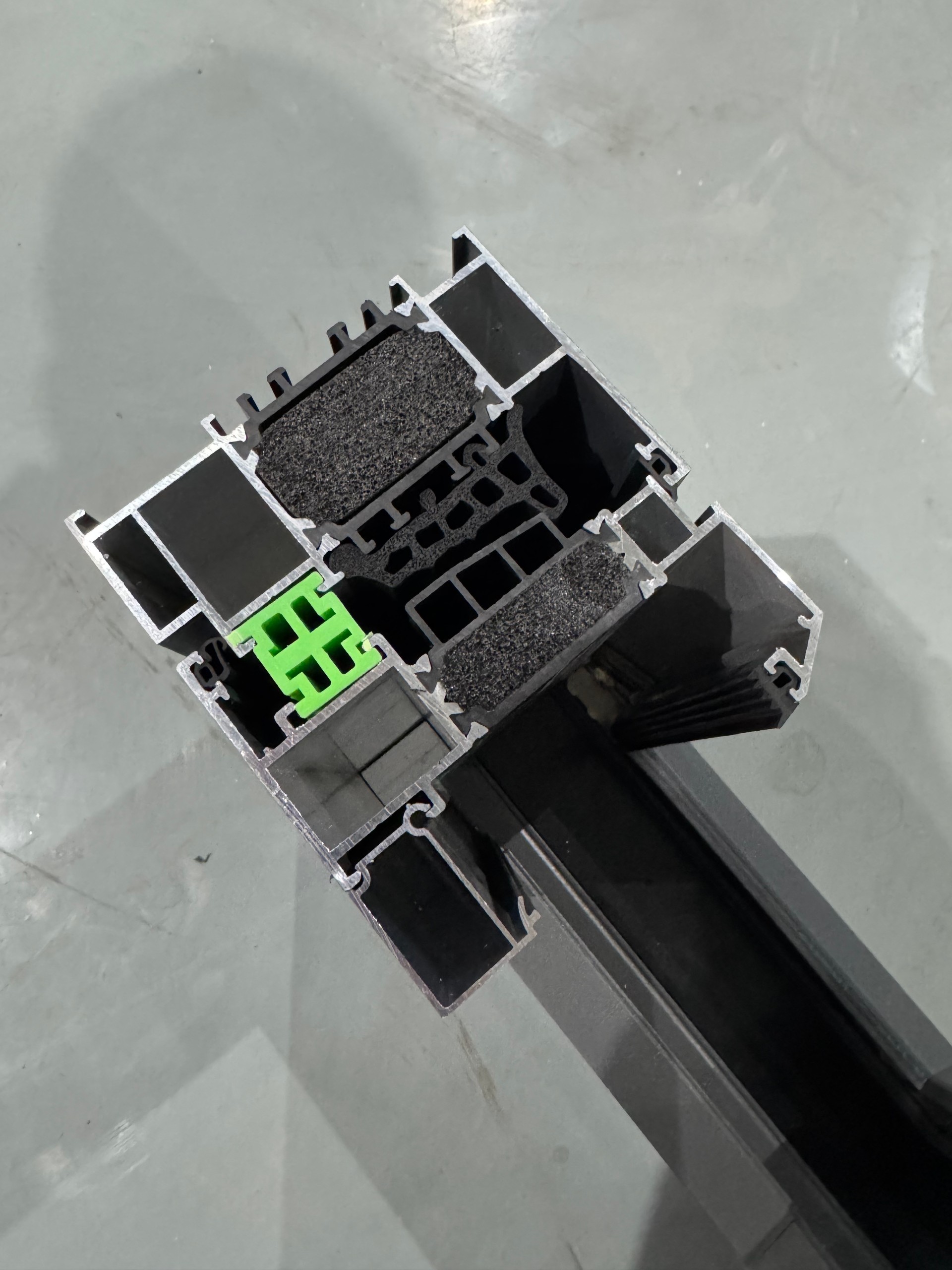
Why is maintenance of the FG110F double inward-opening thermal break window worth attention?
When selecting products, door and window contractors and purchasers often focus on profile wall thickness, glass configuration, and thermal insulation performance, while maintenance is often considered last. However, for double inward-opening thermal break windows like the FG110F, the maintenance strategy directly affects the reputation after project delivery and the cost of rework.
Impact of maintenance on the long-term performance of double inward-opening thermal break windows
The double inward-opening structure means that the sash, hardware, and sealing strips operate more frequently than in fixed windows or sliding windows. Every time the window is opened or closed, the hinges, locking points, and transmission mechanisms are subject to wear;Each sealing strip undergoes compression and rebound. This is not a product defect, but a physical characteristic of all inward-opening windows.
The FG110F uses 6063-T5 aluminum alloy profiles. The corrosion resistance of the profile itself is guaranteed, but the lifespan of the hardware and rubber seals depends on the usage environment and maintenance frequency.
What really deserves attention is:Maintenance is not about "repairing when broken," but rather determining whether this window can still maintain its factory-level sealing and thermal insulation performance in the fifth and tenth years. The thermal insulation performance of thermally broken aluminum depends on the integrity of the thermal break strips, while the sealing performance depends on the elasticity of the rubber seals. Aging and hardening of rubber seals, as well as loosening and dust accumulation in hardware, will cause the originally compliant sound insulation and thermal insulation effects to degrade year by year.
What are the maintenance priorities for the FG110F double inward-opening thermally broken window?
The maintenance dimensions can be summarized into four core aspects, each corresponding to different failure risks and inspection cycles:
1. Lubrication and tightening of hardware
The transmission rods, locking points, and hinges of double inward-opening windows are the components that move most frequently. It is recommended to check every six months whether the screws are loose and to apply appropriate lubrication to the moving parts. Once the hardware becomes stuck, users will instinctively operate it forcefully, which actually accelerates damage.
2. Cleaning and Replacement of Sealing Strips
The sealing strips are the "consumables" for the sealing performance of double inward-opening windows. Accumulated dust accelerates the hardening of the strip surface, especially in areas with strong sand and wind. For daily cleaning, wipe with a damp cloth and avoid using organic solvents.
It is recommended to check the strips annually for cracks or permanent deformation, and replace them promptly if problems are found, rather than waiting until air or water leakage occurs.
3. Drainage System Unclogging
If the drainage holes of the thermal break window are blocked by dust or debris, rainwater will backflow into the profile cavity. As an inward-opening window, the FG110F has a relatively direct drainage path, but it is still necessary to check whether the drainage holes are unobstructed before and after the rainy season. This step is the most easily overlooked, yet it is the main source of after-sales issues.
4. Cleaning of Glass and Profile Surfaces
Once the seal of the insulating glass unit (reference configuration: 5+27A+5) fails, fogging will occur and cannot be repaired. During daily cleaning, be careful not to use hard tools to scrape the sealant at the edges of the glass. Use a neutral cleaner for the profile surface, and avoid acidic or alkaline cleaners that may damage the oxide film.
Who needs to pay special attention to maintenance? For street-facing residences, projects in cold northern regions, and areas with strong sand and wind, the maintenance frequency should be appropriately increased. **Who can relax the schedule appropriately?
** For commercial spaces with mild climates and low usage frequency, basic periodic maintenance is sufficient.
The next thing to confirm is: does your project's environment have extreme temperature differences, high humidity, or high sand and wind? This determines which items in the maintenance plan need to be performed more frequently. You can provide the project's usage environment to the Haipaisichuang team to confirm whether the seal strips and hardware configuration of the FG110F are suitable for your specific working conditions, and whether there is a suitable maintenance spare parts solution.
Daily cleaning and inspection: which steps can effectively extend the lifespan of the FG110F double inward-opening thermal break window?
The lifespan of the FG110F double inward-opening broken-bridge window largely depends not on the profile itself, but on two easily overlooked aspects: whether the drainage system is unobstructed and whether the sealing strips remain elastic. The following is explained in order of operation frequency from high to low.
Correct Cleaning Methods for Profiles and Glass
Profile Cleaning: Wipe with a soft cloth dipped in clean water or a neutral detergent. Avoid using steel wool, stiff brushes, or cleaners containing abrasive particles, as they can scratch the oxide film on the surface of 6063-T5 aluminum alloy. Once the oxide film is damaged, the profile may experience localized corrosion in humid environments. This is not a material defect but a normal result of the failure of the surface protective layer.
Glass Cleaning: Use a glass squeegee or chamois cloth with a dedicated glass cleaner. Be careful not to let the cleaning agent flow into the sealant strip gap between the glass and the profile, as long-term residue will accelerate the aging of the strip. If the configuration is 5+27A+5 insulating glass, avoid using sharp tools to clean the glass edges to prevent damaging the sealant of the insulating layer.
A detail that is easy to overlook: For the hardware of double inward-opening windows (hinges, lock points, transmission rods), wipe off dust with a dry cloth during cleaning, and apply a small amount of neutral lubricant to moving parts every six months. This prevents the hardware from jamming due to dust accumulation, which is a unique maintenance requirement for inward-opening windows.
Key points for daily inspection of the drainage system and sealing strips
Drainage system (check quarterly): The drainage holes of thermal break windows are usually at the bottom outside of the window frame and are easily blocked by dust and mortar particles. The inspection method is simple: pour a small amount of clean water onto the indoor window sill and observe whether the water can flow out smoothly from the exterior drainage holes. If water accumulates, use a thin wire or toothpick to clear the drainage holes.
This step is directly related to whether water will back up into the frame during heavy rain, and it is the most critical single check for extending the overall lifespan of the window.
Sealing strips (check every six months): Press the sealing strip along the window sash with your hand and observe the rebound speed. If obvious indentations appear after pressing and the rebound is slow, it indicates that the rubber strip has begun to harden. In this case, contact the Haipaisichuang team to confirm the compatible replacement strip model. Also check the sealing strip for any partial detachment or cracks at the joints. The dual inward-opening structure requires uniform compression of the sealing strip, and local failure can lead to air leakage, noise, and reduced thermal insulation performance.
Hardware tightening (once a year): Open the window sash and check all visible screws for looseness, especially the fixing screws at the hinges and locking points. In daily use of thermally broken aluminum windows, loose hardware is the most common cause of performance degradation, and timely tightening is much cheaper than replacing components.
Judgment criteria: If in the above checks the drainage holes are clear, the weatherstripping rebounds normally, and the hardware is not loose, the thermal insulation and sealing performance of the FG110F can be maintained at factory level. If you find hardened weatherstripping or stuck hardware, it is recommended to first provide the Haipaisi Chuang team with the reference dimensions of the window (e.g., 1000×1000mm) and the specific fault location, and confirm the suitable maintenance plan before handling, to avoid replacing mismatched components yourself.
Maintenance of hardware and moving parts: How to ensure smooth long-term opening and closing of double inward-opening windows?
The smoothness of opening and closing of the FG110F double inward-opening thermally broken window directly depends on the condition of the three core hardware components: hinges, locking points, and the transmission mechanism. The double inward-opening structure has one more set of movement logic than the single inward-opening type, and the hardware bears greater reciprocating friction and lateral force. When maintenance is inadequate, the first issues to appear are not sash deformation, but misaligned locking points, heavier handles, and sash sagging.
Lubrication cycle and method for hinges, locking points, and transmission devices
Lubrication cycle: It is recommended to perform a comprehensive lubrication every six months, that is, twice a year. If the project is located in an environment with strong wind and sand, coastal salt spray, or industrial dust, shorten the interval to once every quarter. The judgment basis is simple—if you hear a "squeak" sound when opening or closing the window, or feel a significant increase in resistance, it indicates that the lubrication has failed, and you should not wait until the fixed cycle to address it.
The lubrication method is divided into three steps:
- Cleaning: First, use a dry cloth to wipe off dust and old grease stains from the hinge shaft, the surface of the locking points, and the slide groove of the transmission device.Do not use water or a damp cloth; residual moisture will accelerate rusting of metal parts.
- Lubrication: Use neutral lubricating oil (sewing machine oil or specialized door and window hardware lubricant are both acceptable). Apply 1-2 drops to the hinge pivot, apply a thin coat to the surface of the locking points, and lightly spray along the track direction of the transmission mechanism's slide groove.Pay attention to the amount used—excessive oil will attract dust and form sludge, accelerating wear.
- Open and close test: After lubrication, continuously open and close the window sash 5-8 times to allow the lubricant to distribute evenly, and also confirm whether the opening and closing force has returned to a uniform level.
It is important to note: Do not use thick greases such as butter or lithium-based grease. This type of grease will harden in low-temperature environments, which actually increases the resistance of the transmission mechanism, especially noticeable in cold northern regions.
What should be done if loose or worn hardware is found?
Loose and worn hardware are two different types of problems, and the handling methods are completely different. First, determine the issue, then take action.
Loose: This manifests as misalignment between the locking point and the locking plate after the window sash is closed, and a slight shaking sensation of the sash. The solution is to use a hex wrench or a Phillips screwdriver to tighten the hinge fixing screws and the locking point base screws one by one. Pay attention to the tightening order—first tighten the hinges, then the locking points, and finally check the transmission mechanism connection screws.
If it remains loose after tightening, it may be due to stripped screws or enlarged mounting holes. In this case, do not force a larger screw size; contact the Haipaisichuang team to confirm the hardware model and replace the corresponding parts.
Wear: It manifests as obvious indentations on the surface of the locking points, metal friction noise when the hinges open and close, and free play when turning the handle. Once wear occurs, lubrication cannot repair it; the worn parts must be replaced. Here is a key judgment: if only a single locking point is worn, it can be replaced individually;However, if multiple locking points are worn simultaneously and the window sash shows signs of sagging, it indicates that the hinge load-bearing capacity is insufficient or the sash was not properly leveled during installation. Replacing only the locking points will not solve the root problem; the hinge position needs to be readjusted or hinges with a higher load-bearing rating need to be installed.
It is not recommended to disassemble the drive mechanism yourself. The internal structure of the drive mechanism is precise. After disassembly, it is difficult to reassemble it with the same factory precision, which may instead cause the locking points to be out of sync. If the drive mechanism becomes stuck or the locking points cannot move in sync, record the fault symptoms (which locking point is not moving, at which position the handle gets stuck), and submit them along with the product model and project information to the Haipaisichuang team. The technical staff will determine whether to replace the entire drive mechanism assembly or perform local repair.
There is another detail that is easy to overlook in daily use: When the double inward-opening window is in the open position, do not let the sash hang on the hinges for a long time to bear wind loads. In windy weather or when no one is around for a long time, it is recommended to close and lock the sash, which can significantly reduce hinge fatigue wear.
Common maintenance misconceptions and supplier support: which issues require contacting hyperstron?
The daily maintenance of the FG110F double inward-opening thermal break window is not complicated, but many damages at project sites actually stem from "doing good with bad intentions." Below, we first clarify the most common misconceptions, and then explain when you should stop handling issues yourself and directly contact the Qinhan System Doors and Windows team.
Avoid maintenance misconceptions such as disassembling parts yourself and using improper cleaning agents
Misconception 1: Disassembling hardware parts yourself to "apply oil"
The hardware system with double inward-opening structure has been debugged at the factory. If contractors or property staff disassemble the hinges or lock points themselves for lubrication, it is easy to damage the original engagement position, leading to sash sagging or poor sealing. For daily maintenance, simply wipe dust off the track and lock point surfaces with a dry cloth; no additional lubricating oil is needed.
Misconception 2: Using acidic or abrasive cleaners
The FG110F uses 6063-T5 aluminum alloy profiles, and the surface treatment layer is sensitive to strong acids, strong alkalis, and abrasive particles. Using descaling agents containing hydrochloric acid or steel wool for cleaning will directly damage the oxide film, causing color differences and corrosion spots. The correct approach is to use a neutral cleaner with a soft cloth, wiping along the grain direction of the profile.
Misconception 3: Ignoring the inspection of drainage holes and weatherstripping
The drainage system of thermal break windows is concealed, and many maintenance issues arise from drainage holes being blocked by dust or cement mortar, rather than from the profiles themselves. During each maintenance session, you should conveniently check whether the drainage holes at the bottom of the frame are unobstructed, and whether the rubber seals show signs of hardening or detachment from the groove—these two items affect the actual service life more than cleaning the glass.
When should you contact Qinhan System Windows for professional support?
In the following situations, it is recommended to contact the supplier directly rather than continuing to handle the issue on site:
When structural or hardware functional abnormalities occur
If the window sash shows obvious sagging, fails to close tightly, the locking points feel stuck, or there are unusual noises when opening or closing, this is usually not a cleaning issue but a change in installation precision or the condition of the hardware. Self-adjustment may worsen the problem and affect subsequent warranty assessments.
When the glass configuration needs to be replaced or upgraded
The reference glass configuration for FG110F is 5+27A+5 insulating glass, but if the project later requires replacement with a different thickness or laminated configuration, the profile groove and load-bearing capacity need to be re-confirmed. Such changes must be evaluated by the supplier based on actual order parameters and cannot be directly replaced on site.
When suspected material issues arise during the warranty period
If abnormal corrosion not caused by external force, large-scale aging of sealing strips, or breakage of hardware parts is found on the profile surface, please retain on-site photos and installation records and contact the Qinhan System Doors and Windows team to confirm whether it falls within the warranty scope. Note: Warranty assessment needs to consider the installation method and actual usage environment; disassembling in advance on your own may affect liability determination.
When supplementary accessories or bulk stocking are needed
Later maintenance of engineering projects often requires supplementing sealing strips, hardware parts, or glass from the same batch. Since there may be slight differences between different batches of profiles and accessories, it is recommended to provide the supplier with the order number or product model (FG110F) directly, and the team will match spare parts after verifying the original configuration to avoid poor fit due to mixing.
FAQ
Q: The drain hole of FG110F is clogged. Can I poke it with an iron wire? You can use a soft plastic strip or an air blower to clean it. It is not recommended to poke it hard with a metal wire, as it may damage the sealing structure inside the drain hole. If the blockage is a hard block such as cement mortar, it is safer to contact the supplier to obtain the drain hole location drawing before handling it.
Q: The hardware does not switch smoothly. Is it lack of oil? Not necessarily. The hardware of the double inward opening window is lubricated at the factory. The more common reasons for unsmooth switching are frame deformation during installation, misalignment of lock points, or squeezing of the weatherstrip.
It is recommended to first check whether there are foreign objects stuck. If it is still not smooth after elimination, contact the supplier to arrange an inspection instead of adding lubricating oil by yourself.
Q: If the glass fogs up during the warranty period, can I replace it myself? It is not recommended. Fogging in the glass indicates that the seal of the insulating layer has failed. Replacing it yourself may involve issues with matching the glass dimensions, sealant, and profile grooves.
Please take photos to record the location and time of the fogging, and contact the Qinhan System Windows and Doors team to confirm the solution.
Q: For a project, we need to order a few sets of the same windows. Can we just provide the model number? You need to provide the original order number or contract number. FG110F supports different wall thicknesses and glass configurations. Providing only the model number cannot confirm the original parameters. The supplier needs to verify the original order to better ensure that the replenishment batch matches the existing products.
Q: What regular inspections are needed for daily maintenance? It is recommended to check every six months whether the drainage holes are unobstructed, whether the rubber strips have come out of the groove or hardened, whether the hardware locking points are loose, and whether the glass sealant has cracked. If any issues are found, contact the supplier promptly to confirm the handling method, and do not disassemble structural components on your own.
Learn More
Maintenance is the guarantee of the project's long-term reputation.If you have any questions about the maintenance plan, spare parts configuration, or project condition adaptation of the FG110F double inward-opening thermal break window, please submit your project environment information and window specifications to the Qinhan System Windows and Doors team. We will assist in matching the maintenance plan and spare parts solution based on actual working conditions.
Related Products:FG110F Double Inward-Opening Thermal Break Window