
Why does the 80 Series single casement window require regular maintenance?Three major wear points determine its lifespan
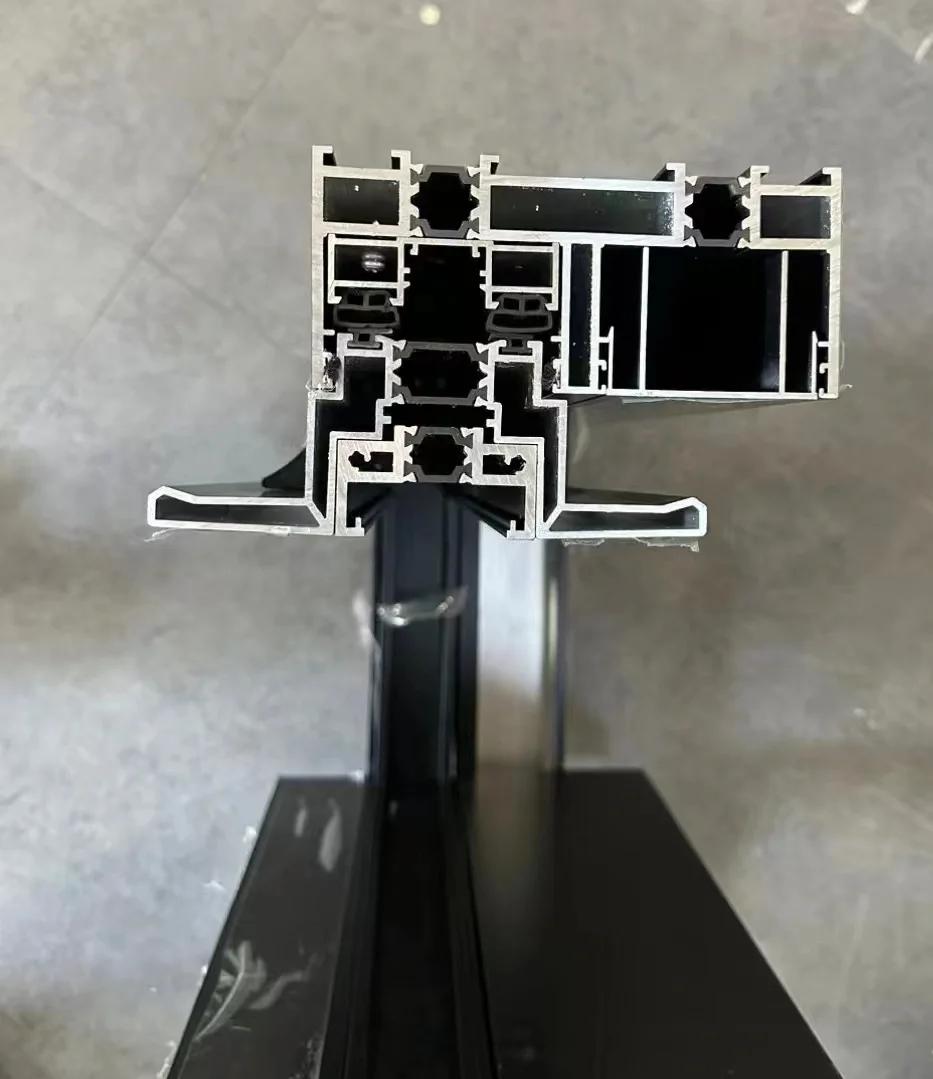
The lifespan of a single casement window is not determined by the profile, but by the moving parts and sealing components. The 80 Series reinforced single casement aluminum window uses 6063-T5 aluminum alloy with a wall thickness of 1.8mm. Under normal use conditions, this part hardly experiences natural wear—the oxide layer on the aluminum alloy actually forms a protective film over time. What truly determines whether a window lasts 5 years or 20 years are the following three wear points.
Hardware wear: the most overlooked source of failure in single casement windows
The hinges, locking points, transmission devices, and handles of a single casement window are among the key components of the entire window that continuously endure mechanical friction. Each time the window is opened and closed, the hinge pivot experiences wear;Each time the window is locked, the locking point strikes the strike plate. At four openings and closings per day, that's nearly 1,500 cycles a year.
Hardware problems don't happen suddenly; they develop gradually:
- Hinge wear: The sash begins to sag, the locking points misalign when closing, the weatherstripping doesn't compress properly, and air and sound leakage follow.
- Loose locking points: Locking force decreases, the compression between sash and frame is insufficient, directly affecting thermal and acoustic insulation.
- Transmission fatigue: The handle rotation becomes stiff, and in severe cases, the transmission rod deforms, making it impossible to lock properly.
This is why hardware is more prone to problems than profiles—profiles are static load-bearing components, while hardware is dynamic friction components. In materials science, any kinematic pair experiences wear; this is a physical law, not a product quality issue. The advantage of the 80 Series thickened profile is that even if the hardware wears out and needs replacement, the profile itself remains intact. Replacing the hardware can restore the window's performance without needing to replace the entire window.
Seal Aging and Glass Edge Cleaning: Key to Thermal and Acoustic Insulation
The second point of wear is the sealing strip. The thermal and acoustic insulation performance of doors and windows essentially depends on the integrity of the sealing system. Sealing strips (usually made of EPDM or silicone rubber) are exposed to ultraviolet light, temperature differences, and ozone for a long time, gradually hardening, losing elasticity, and eventually cracking or shrinking.
Once the sealing strip fails, no matter how thick the profile is or how good the glass configuration is (such as 5+22A+5 insulating glass), the thermal and acoustic insulation performance will be greatly compromised—because air and sound will penetrate directly through the failed seal.
The third point of loss is the drainage holes and sealant at the edge of the glass. The sealant at the edge of insulating glass may age under long-term thermal expansion and contraction. If the drainage holes are blocked by dust and debris, rainwater cannot drain properly and will accumulate inside the window frame, accelerating corrosion of hardware and deterioration of sealing strips.
The practical significance of maintenance
The essence of maintenance isto intervene before the point of loss fails。 For the 80 Series single casement window, maintenance actions are not complicated: clean the drainage holes and glass edges every six months, check the tightness of hardware annually, and evaluate the condition of sealing strips every 3-5 years. The cost of these actions is far lower than the cost of replacing hardware or sealing strips, and even lower than the damage to interior decoration caused by window failure.
For engineering contractors and procurement parties, understanding this point also has practical value: at project delivery, clearly informing the owner of the maintenance cycle and inspection points can significantly reduce after-sales complaints caused by improper use in the later stage. The profile lifespan is more than 20 years, but the overall lifespan of the window depends on when you start maintaining it.
How to do daily maintenance?Quarterly maintenance checklist for aluminum alloy windows
The profile wall thickness of the 80 Series reinforced single casement window is 1.8mm, and the material is 6063-T5 aluminum alloy. The surface of this type of profile is usually treated with anodizing or powder coating. The core goal of maintenance is not to 'make it more durable', but toavoid man-made damage—Most aluminum alloy windows age prematurely due to incorrect cleaning methods and lack of lubrication on hardware parts, rather than the profile itself.
Cleaning frequency and tool selection: avoid scratching the profile surface
Frequency: daily dusting once a month, deep cleaning once a quarter. If your area is dusty or near the sea (salt spray environment), change deep cleaning to once every two months.
When cleaning, remember one principle:Rinse first, then wipe; never dry wipe. If you dry wipe the dust particles on the profile surface directly with a cloth, it is equivalent to sanding the surface coating with sandpaper.
Specific operation:
- Rinse with clean water or a low-pressure water gunFor the profile surface and glass, rinse off loose dust and sand particles.
- Use a soft brush or sponge dipped in a neutral detergent(a diluted dishwashing liquid solution is fine) to wipe the profile surface.Avoid using strong acid or alkali cleaners, steel wool, or scouring pads—these will damage the anodized or coated layer on the profile surface. Once damaged, it cannot be repaired and must be recoated.
- Clean the track grooves and drainage holes with an old toothbrush or a fine brush, as these are the most prone to accumulating mud and sand.
- Finally, dry with a soft dry clothto avoid prolonged water stains.
Special attention: Do not use cleaning pastes containing abrasive particles, nor solvent-based cleaners (such as thinner or acetone), as they will dissolve the surface coating of the profile.
Lubrication and tightening of hardware: key points for quarterly inspection
Frequency: once per quarter, in sync with deep cleaning.
Hardware is the most prone to problems in casement windows, especially hinges, transmissions, and locking points. Insufficient lubrication can make opening and closing difficult, and over time, it will wear out the hardware, ultimately affecting the seal.
What oil to use? Recommended to useSilicone grease lubricantorsewing machine oil; do not use ordinary cooking oil (it will attract dust and deteriorate) or WD-40 (highly volatile, poor lubrication durability).
Operation steps:
- Check all screws for looseness—hinge screws, lock point screws, and transmission fixing screws.Use a Phillips screwdriver to tighten them one by one, but do not over-tighten to avoid stripping the threads.
- Apply a drop of lubricant to the hinge pivot, the moving parts of the drive mechanism, and the contact surfaces of the locking points.Then open and close the window 3-5 times to distribute the oil evenly.
- Wipe off excess oil with a dry clothto prevent oil stains from contaminating the profiles and glass.
What should I do if the drainage holes are blocked?
Drainage holes are usually located at the bottom of the window frame and serve to drain accumulated water from inside the profiles. If blocked, rainwater may backflow into the room, or accumulate inside the profiles for a long time, accelerating the aging of the weatherstripping.
Handling steps:
- Find the drainage holes at the bottom of the window frame (usually 2-4 per window, located on the outside of the profile).
- Usea thin wire or paper clipto gently poke into the drainage holes to clear the sediment inside.
- Slowly pour clean water from the top of the window sash and observe whether the water flows out smoothly from the drainage holes.If the water does not flow smoothly, repeat the clearing process.
- Do not use sharp hard objects to poke forcefully, as there is a waterproof baffle inside the drainage holes, and damaging it can cause rainwater to backflow.
Annual maintenance: a comprehensive inspection once a year
In addition to quarterly maintenance, it is recommended to conduct a comprehensive inspection before winter each year:
- Check the sealing stripsfor aging, cracking, or detachment.Aged sealing strips can cause air leakage, water leakage, and reduced sound insulation.If problems are found, replace them promptly, choosing a model with the same cross-section as the original strips.
- Check the glass beadingsfor looseness and whether the glass feels shaky.
- Check the surface coating of the profilefor peeling, fading, or scratches.If local damage is found, promptly treat it with touch-up paint of the same color to prevent oxidation from spreading.
Parts suitable for DIY: Cleaning, lubrication, tightening screws, and unclogging drainage holes—these do not require professional tools and can be completed within half an hour.
Parts recommended to be handled by professionals: Replacement of sealing strips, overall replacement of hardware, and adjustment of glass beads—these involve matching of accessories and installation precision, and doing them yourself can easily lead to poor sealing or sash sagging. If your windows show obvious difficulty in opening and closing, poor sealing, or air leakage, it is recommended to first confirm your hardware model and sealing strip specifications with the current website team before deciding on a replacement plan.
Maintenance priorities in different scenarios: how do residential, coastal, and engineering projects differ?
The same 80 Series reinforced single-opening aluminum window, whether installed in a residence, a coastal villa, or a batch engineering project, has completely different maintenance logic. The difference is not in the window itself, but in the environmental stress it faces and the maintenance effort you can invest.
Coastal high-salt-fog environment: corrosion checks need to be more frequent
If you use it in coastal areas, the maintenance frequency needs to be significantly higher than for inland residences. The salt carried by sea breezes adheres to the profile surface, and combined with high humidity, it continuously challenges the aluminum alloy's oxide layer and the hardware's plating. Although 6063-T5 aluminum alloy itself has good corrosion resistance, the salt-fog environment accelerates the wear and rusting of hardware parts (hinges, lock points, friction stays).
There are three maintenance priorities in coastal areas:
- Hardware Lubrication and Inspection: Check hinges and locking points every 3-4 months and apply neutral lubricant.If you notice abnormal noise or increased resistance when opening and closing, it indicates early wear of the hardware. Don't wait until it jams to address it.
- Drainage Hole Clearing: Salt crystallization can easily block the drainage holes of the window frame, causing rainwater to accumulate inside the frame, accelerating seal strip aging and metal corrosion.Check before and after every typhoon season.
- Seal Strip Condition: Salt spray accelerates the aging and cracking of rubber seal strips.In coastal areas, it is recommended to check the elasticity of the sealing strips once a year. If hardening or cracks are found, replace them promptly; otherwise, the sound insulation and thermal performance will noticeably decline.
Engineering projects and batch windows: establish a regular inspection system
The biggest difference between engineering projects and residential maintenance is that in residential settings, individual homeowners care for their own windows, while in engineering projects, the property or management is responsible for dozens or even hundreds of windows collectively. It is unrealistic to meticulously maintain each window individually; efficiency comes from a system, not from individual conscientiousness.
Maintenance for engineering projects should be carried out using an approach of "inspections plus targeted handling":
- Quarterly inspections: Conduct inspections once per quarter, focusing on whether hardware parts are loose, whether glass beads have fallen off, and whether drainage is unobstructed.During inspections, use a form to record issues for each building and each unit, rather than dealing with problems only when they are discovered on the spot.
- Special inspection after typhoon/heavy rain: After strong wind weather, it is necessary to check the sealing performance of all windows and the tightening of hardware, especially on high floors and windward sides.This cannot wait for the quarterly inspection; it should be an event-triggered mechanism.
- Establish a spare parts list for vulnerable components: The biggest concern for batch windows is that if one window's hardware breaks, it may remain unrepaired for a long time due to long procurement cycles.It is recommended to confirm the spare parts plan for common hardware and sealing strips with the supplier at project delivery to avoid passive maintenance later.
Are the maintenance frequencies the same for residential and engineering projects?
No, they are different. Maintenance for individual residential windows can be more detailed but does not need to be too frequent. In inland areas, a comprehensive inspection once a year and lubrication of hardware every six months is generally sufficient.For coastal residences, follow the 3-4 month cycle mentioned above. For engineering projects, the maintenance frequency for individual windows can actually be lower (quarterly inspections), but due to the large number of windows, it must be supported by a system, and cannot rely on addressing problems only after they occur in individual windows.
Key trade-off: Residential users want 'less worry', so maintenance actions should be simple, low-frequency, and doable by themselves;Engineering projects want 'no batch problems', so the core of maintenance is the inspection system and spare parts plan, rather than detailed care of individual windows. If you are responsible for an engineering project, before placing an order, it is recommended to confirm with the current website team the brand and model of the hardware, and whether spare parts can be purchased separately later—this directly determines the convenience of future maintenance.
When should you contact the manufacturer?List of Problems That Maintenance Cannot Solve
Daily maintenance of the 80 Series thickened single-hung window is not complicated—cleaning drain holes, lubricating hardware, and checking the condition of weatherstripping are all tasks you can handle yourself. However, once certain problems appear, they indicate that components have gone beyond what "maintenance" can address, and continuing to handle them on your own will only increase the damage.
Fogging in Insulating Glass: A Sign of Seal Failure
The 5+22A+5 configuration of the insulating glass relies on edge sealant and desiccant to maintain internal dryness. If you notice water mist or droplets on the inner side of the glass (between the two panes) that cannot be wiped away and do not dissipate for days, this is not surface dirt but a sign that the seal layer has failed.
Judgment Criteria:
- The fogging is located on the glassInside, not on interior or exterior surfaces.
- Fogging recurs after temperature changes and does not disappear naturally.
- Cracks, whitening, or peeling of the sealant can be seen at the glass edges.
Why you cannot handle it yourself: Resealing insulating glass requires a dust-free environment and replacement of the desiccant. If you disassemble and reassemble it yourself, the sealing effect cannot be guaranteed, and it may even cause the entire glass pane to be scrapped. In such cases, contact the manufacturer or a professional door and window repair technician to replace the insulating glass unit.
Hardware jamming or loosening: handle it yourself or return to the factory for repair?
If the hardware (handles, hinges, transmission lock points) becomes stuck or loose, first distinguish between "lack of oil" and "structural damage".
What you can solve yourself:
- Handle rotation is stiff: drop sewing machine oil or special door/window lubricant into the base of the handle, and rotate it several times.
- Screws are slightly loose: tighten them with an Allen wrench, being careful not to overtighten and strip the threads.
When you need to contact the manufacturer:
- The handle turns but the lock points do not engage—the internal transmission rod is broken or detached.
- The window sash sags or does not close tightly—the hinges or pivots are deformed, which cannot be fixed by simply tightening screws.
- The locking points are severely worn, and there is still noticeable wobbling after locking.
Key reminder: Do not disassemble the hardware components yourself. The hardware system of the 80 Series single casement window is an interlinked structure. Once one component is removed, the relative positions of other components will change, making it difficult to restore the original factory precision during reassembly. Also, do not replace original parts with ordinary screws, as mismatched specifications will accelerate wear.
What to prepare before contacting the manufacturer
When contacting the manufacturer, prepare the following information in advance to speed up the process:
- Product model (80 Series reinforced single aluminum casement window) and reference dimensions.
- The location of the problem (glass, handle, hinge, lock point) and the specific phenomenon
- Years of use and general usage environment (whether coastal, whether high-rise)
- Whether you have handled it yourself and which parts were handled
Common problems
Q: After the insulating glass fogs up, can I just replace the glass without replacing the window frame? Yes. The glass of the 80 Series single casement window is an independent component. If the window frame and profiles are not damaged, only the insulating glass needs to be replaced.
However, note that the size, thickness, and configuration of the new glass must match the original window. It is recommended to provide the manufacturer with the original window dimensions for confirmation.
Q: The hardware is sticking. Can I spray WD-40 on it? It is not recommended. WD-40 is a rust remover, not a lubricant. After it evaporates, it will take away the original grease, and it may become even stiffer in the short term.
You should use a lubricant specifically for doors and windows or sewing machine oil, applying it in small amounts multiple times.
Q: The window sash is sagging and won't close tightly. Can adjusting the hinges solve this? If the hinge screws are loose, tightening them will suffice.If the hinge itself is deformed or worn, adjustment can only provide temporary improvement, and ultimately the hinges need to be replaced. How to tell: If the window still won't close tightly after tightening the screws, it means the hinges have reached the end of their service life.
Q: For use in coastal areas, what should be done if the hardware rusts? For light surface rust, you can polish it with fine sandpaper and then apply anti-rust oil.If the rust has affected the linkage of the locking points or the rotation of the hinges, it is recommended to replace the hardware directly. In coastal high-salt environments, the lifespan of hardware is usually shorter than that of the profiles, which is normal wear and tear.
Q: Will replacing glass or hardware by myself affect the warranty? Yes. Sealing failures or accessory damage caused by self-disassembly are not covered by the warranty.
If maintenance is needed, contact the manufacturer first to confirm the solution, to avoid losing warranty rights due to self-operation.
Learn More
If you have further questions about the maintenance of the 80 Series thickened single-leaf aluminum alloy window, hardware configuration, or spare parts solutions for engineering projects, you are welcome to submit your working condition parameters and project requirements to our technical team, and we will assist you in matching the most suitable maintenance solution.
Related Products:80 Series Thickened Single-Leaf Aluminum Alloy Window