
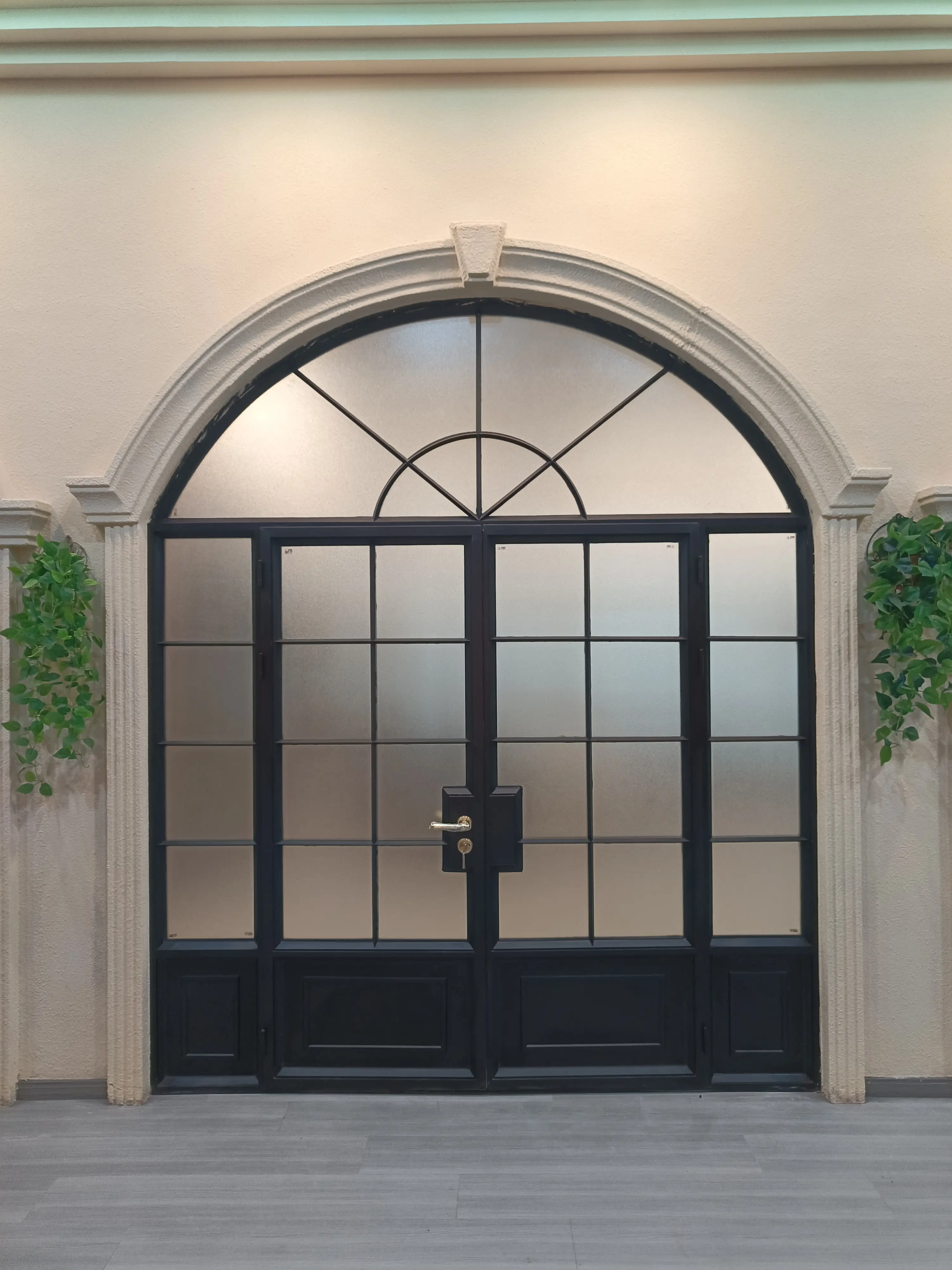
What is the core competitiveness of the 80 Series single casement window? First, look at the profiles and configuration.
When selecting products, distributors are most likely to fall into the trap of only looking at the 'series number' while ignoring the actual meaning of the profiles and configuration. The core competitiveness of the 80 Series single casement window lies precisely in two details that are easily obscured by parameter tables: the profile material and the matching logic of wall thickness and glass.
What does 6063-T5 aluminum alloy profile mean to distributors?
This 80 Series single casement window uses 6063-T5 aluminum alloy profiles. For distributors, this material choice directly relates to two things: processing yield and delivery stability.
6063-T5 is one of the most mature alloy grades in the field of architectural aluminum profiles. Its excellent extrusion formability means that during mass production, the factory achieves good dimensional consistency and low scrap rates—this directly affects your delivery cycle and restocking costs. T5 aging treatment better ensures the balance between hardness and toughness of the profile, making it less prone to deformation during installation and reducing the probability of sash sagging over long-term use.
For contractors, 6063-T5 also offers a hidden advantage: good compatibility with surface treatments. Whether subsequent anodizing, powder coating, or wood grain transfer is applied, the adhesion performance of this substrate is more stable, reducing customer complaints caused by inadequate surface treatment.
Positioning logic of 1.8mm wall thickness and 5+22A+5 glass
"Is 1.8mm wall thickness sufficient? "This is the most common question from dealers. The answer is: yes, but it depends on where you sell.
The 1.8mm wall thickness corresponds to a thickened profile positioning, higher than the common 1.4mm engineering standard on the market. Its practical significance is not simply 'stronger', but rather it gives you greater configuration margin—especially when you need oversized window types or high-rise projects, the 1.8mm wall thickness can withstand higher wind pressure loads, reducing the risk of sash deformation.
The matching 5+22A+5 insulating glass (5mm glass + 22mm air layer + 5mm glass) is a balanced configuration: the 22mm air layer is wider than the common 12A/15A, significantly improving thermal and acoustic insulation, but without the substantial increase in cost and self-weight that comes with triple glazing. This combination is suitable for most residential and commercial projects, and is a 'no-brainer, fail-safe' configuration.
But be aware of the positioning boundaries: If you are dealing with super high-rise buildings (over 100 meters), large-span window types (single sash over 1.5 square meters), or areas with extreme wind pressure, the 1.8mm wall thickness may still need to be combined with reinforced mullions or adjusted glazing layouts. In such cases, do not directly promise 'it's safe and no problem', but rather organize the project parameters (floor height, window type dimensions, basic wind pressure in the region) and confirm the matching solution with the current website team.
Who is it suitable for: Dealers primarily engaged in residential renovation, small and medium-sized projects, requiring stable delivery and fewer after-sales issues. Who it is not suitable for: Dealers primarily working on super high-rise curtain walls or projects in extreme climate regions—these projects require more detailed structural calculations, not just relying on wall thickness.
The key question to confirm next is: what is the maximum window size in your current project? What is the basic wind pressure level in your area? These two data points determine whether the 1.8mm wall thickness is sufficient for you.
Which projects are suitable for promoting the 80 Series?Five typical scenarios and judgment criteria
The 80 Series thickened single casement window is not a universal answer for all projects, but it is indeed more worth promoting than the ordinary 60 Series or sliding windows in five scenarios. The criterion is not "good or bad," but "suitable or not"—let's break it down by scenario.
Adaptation Logic for Residential and High-Rise Projects
High-rise residential: suitable, but depends on floor level and wind pressure. The 80 Series profile has a thickness of 1.8mm, which is a thickened configuration, providing significantly more wind pressure resistance than the conventional 1.4mm profile. For residences above 10 floors, especially windows in bedrooms and living rooms facing the windward side, this thickness reduces the risk of profile deformation.
The glass configuration of 5+22A+5 has a 22mm air layer, and the sound insulation and thermal performance are a real plus for high-rise residents' noise and energy consumption concerns.
But note:Not all high-rise buildings are suitable. If the project is in a super high-rise building (above 100 meters) or a typhoon-prone area, the hardware load-bearing capacity and glass configuration of casement windows may need to be upgraded. In this case, the 80 Series can serve as a basic solution, but you need to confirm the specific wind pressure zones and glass thickening plan with the current website team, and do not directly apply the standard configuration.
Residential renovation (bedrooms, living rooms): Suitable, especially for customers with sound insulation requirements. Casement windows naturally have better sealing than sliding windows. Combined with a 22A insulating glass layer, they are notably effective in noise scenarios such as houses facing streets or near subways. The criterion is simple: Does the customer rank "quietness" among their top three needs?
If so, the 80 Series is worth recommending;If the customer only cares about ventilation and low cost, recommending sliding windows is more convenient.
Selection Basis for Coastal Areas and Commercial Scenarios
Coastal areas: It is usable and more suitable than ordinary aluminum alloy. The 80 Series uses 6063-T5 aluminum alloy profiles, whose corrosion resistance in coastal high-salt-spray environments is superior to that of ordinary 6063-T6 or profiles without surface treatment. But there is a key prerequisite here: **the surface treatment process determines the actual service life.**
** The difference in salt-spray resistance between powder coating and anodizing is significant. When promoting to coastal projects, you must confirm with the current website team whether the surface treatment grade of these profiles matches the salt-spray corrosion level at the project location. Do not assume that "aluminum alloy equals corrosion resistance." Ask clearly before making any promises.
Commercial projects (street-front shops, office buildings): suitable for standardized bulk procurement. The 80 Series supports custom fabrication and bulk orders. For commercial projects requiring uniform specifications and batch delivery, supply chain efficiency is more valuable than performance. The criterion is: Are the window specifications relatively uniform across the project?
If the dimensions of each window opening vary greatly, customization costs will erode the advantages of the profile. In such cases, it is better to recommend a more flexible series.
Not applicable boundary
The following three situations are not recommended for the 80 Series:
- Budget-sensitive projects: If the client only requires 'livable and balcony-enclosed', the thickened profiles and insulating glass configuration of the 80 Series are over-specified, making it difficult to reduce costs.
- Oversized opening sashes: If the opening area of a single casement window exceeds the norm (e.g., a single sash over 1.5 m²), the hardware load-bearing capacity and profile rigidity will be strained, requiring recalculation rather than directly applying the standard solution.
- Scenarios with extremely high ventilation requirements: The opening area of a casement window is naturally smaller than that of a sliding window. For spaces like kitchens and equipment rooms that require high ventilation, casement windows are not the optimal choice.
Next step: confirm the action.After receiving the project, first confirm three data points: floor height, the basic wind pressure value at the project location, and the customer's specific decibel requirement for sound insulation. Once these three data points are confirmed, then check with the current website team whether the 80 Series needs adjustments to glass configuration or profile wall thickness, and then you can determine whether this project can be promoted.
Compared with the 70/90 Series and thermally broken aluminum, where is the competitive edge of the 80 Series?
The most common mistake dealers make when selecting products is treating the series number as a quality grade. In fact, numbers like 70, 80, and 90 represent the window frame'sconstruction depth (in millimeters)It's not that thicker is better, but that thicker is more suitable for specific scenarios.
Profile Series Differences: 80 vs 70 vs 90
| Series | Construction Depth | Typical Positioning | Suitable Scenarios | Key Trade-offs |
| 70 Series | 70mm | Economical residential buildings | Multi-story residential buildings, self-built houses | Low cost, but with small margins for sound insulation and wind pressure resistance |
| 80 Series | 80mm | Mid-to-high-end residential/projects | High-rise residential buildings, street-facing houses, coastal areas | Balances cost and performance, with profile wall thickness up to 1.8mm |
| 90 Series | 90mm+ | High-end / Large size | Large-span windows, villas, commercial projects | Higher strength, but more profile material usage and significantly increased cost |
This product is an 80 Series thickened single-leaf aluminum window, with reference configuration of 1.8mm profile wall thickness and 5+22A+5 insulating glass. The 1.8mm wall thickness means the profile itself has stronger resistance to deformation than conventional 1.4mm products, making it more stable under high-rise wind pressure.
Key judgment: If your project is ordinary multi-story residential and budget-sensitive, the 70 Series is sufficient;If it is high-rise (above 20 floors), street-facing, or in a coastal high-salt mist environment, the 80 Series thickened profile is a more cost-effective choice—the performance margin of the 90 Series is not needed in most residential scenarios, and the extra cost will not translate into value perceivable by customers.
Single-sash vs. sliding: how the opening method affects product selection
The 80 Series is typically made as single-sash (casement) windows, which follows a different product selection logic from sliding windows:
- Single-sash windows: Good sealing, better sound insulation and thermal performance than sliding, but they occupy indoor space when opened.Suitable for bedrooms, living rooms, and other areas with high comfort requirements.
- Sliding windows: It takes up no space and is easy to use, but its sealing performance is naturally weaker than casement windows, and its sound insulation and thermal insulation effects are discounted.It is suitable for areas with low sealing requirements, such as kitchens, balconies, and bathrooms.
Decision implications: If your client is a residential project, it is recommended to equip bedrooms and living rooms with 80 Series single casement windows, and use sliding windows in kitchens and bathrooms to reduce costs. If the client requires sliding windows throughout the entire house, the 80 Series single casement window is not a suitable option—this is not a matter of product quality, but a mismatch between the opening method and the needs.
Is thermal break aluminum better than aluminum alloy?
"Thermal break aluminum" is not a material, but ratherthe addition of thermal break strips in the middle of aluminum alloy profilesof the process. Ordinary aluminum alloy (such as the 6063-T5 used in this product) conducts heat quickly, while thermal break aluminum significantly improves insulation performance by using thermal barrier strips to interrupt the heat bridge.
But here is a point that dealers must think through: The cost of thermal break aluminum is typically 15%-30% higher than that of ordinary aluminum alloy. This product uses 6063-T5 aluminum alloy profiles with 5+22A+5 insulating glass, which can provide acceptable insulation performance in non-severe cold regions (where the lowest winter temperature is not below -10°C). If your project is located in a severe cold region, or the client explicitly requires passive house-level insulation, then the ordinary aluminum alloy 80 Series is insufficient, and you need to confirm whether a thermal break structure can be customized—this requires confirming the specific configuration plan with our team.
Conclusion boundary: The competitiveness of the 80 Series thickened single-opening aluminum alloy window lies in covering the sound insulation, wind pressure resistance, and corrosion resistance needs of most residential and engineering projects at a cost lower than that of thermal break aluminum. It is not suitable for scenarios such as: projects with high thermal insulation requirements in severely cold regions, oversized window types (for which we recommend directly considering the 90 Series or broken-bridge solutions), and low-budget batch projects (for which the 70 Series is more appropriate).
Dealer product selection decision: Under what circumstances is it worth adding to the product line?
The 80 Series thickened single-opening aluminum window is not a "universal product" suitable for all channels; its value is concentrated in specific customer groups and project types. Below are the criteria for deciding whether to include it or not.
Three situations where inclusion is recommended
1. You have clear inquiries for residential or small-to-medium-sized engineering projects, and the customer has specific requirements for sound insulation and thermal insulation. This product's reference configuration is 5+22A+5 insulating glass with 1.8mm thickened profiles, providing clear selling points for scenarios such as bedrooms and living rooms where noise and temperature sensitivity are concerns. If this type of demand accounts for a high proportion of your customer base, adding it to the product line can directly translate into orders.
2. Your distribution channels cover coastal areas or high-rise residential projects. The corrosion resistance of 6063-T5 aluminum alloy profiles is a tangible advantage in coastal high-salt environments, and thickened profiles also help withstand wind pressure. Such projects are more sensitive to profile quality than to price, making them suitable for promotion as profit-oriented products.
3. You are building OEM/ODM customization capabilities and need a base product that can be flexibly adjusted. This product supports adjustments in different wall thicknesses and glass configurations, and also accepts customization according to drawings. If you have customers willing to place bulk orders after confirming samples, this product can serve as the starting point for your customization business, rather than only offering standard products.
Two scenarios where inclusion is not recommended
1. Your main customers are low-budget, high-turnover bulk engineering channels. The thickened configuration of the 80 Series means higher costs than the standard series. If your customers only compare prices and don't focus on performance parameters, this product will be at a disadvantage in terms of price, with a higher risk of inventory backlog. Such channels are more suitable for promoting the standard wall thickness regular series.
2. You have not yet established communication and delivery processes for custom orders. Customization involves drawing confirmation, sample prototyping, and batch production cycle management. If these steps are not handled well, profits will be eroded by communication costs. If you currently only deal in spot goods circulation, do not introduce product lines that require deep customization for now.
Budget Boundaries and Next Steps
The core of budget judgment is not "how much does this cost," but "how much more are your customers willing to pay for performance such as sound insulation, thermal insulation, and corrosion resistance." If you can clearly answer this question, and the answer supports premium pricing, then it is worth including;If you cannot answer, do not stock up in large quantities for now; it is recommended to test the waters with samples or small-batch orders.
Next, you need to confirm three things with the hyperstron team:First, whether the commonly used glass configuration in your target market can directly follow the reference configuration, or if adjustments are needed;Second, the minimum order quantity and delivery lead time for bulk orders;Third, how the mold opening costs for profiles are calculated when customizing according to customer drawings. Only after these three items are confirmed can you calculate the true gross profit margin of this product in your channel.
Frequently Asked Questions
Is the 1.8mm wall thickness of the 80 Series thickened single-opening aluminum window sufficient?
The 1.8mm wall thickness is a reinforced configuration, higher than the common 1.4mm engineering standard, and is suitable for most residential and commercial projects.However, for super high-rise buildings or areas with extreme wind pressure, it is necessary to further confirm whether the mullion needs to be reinforced or the plan adjusted, based on parameters such as floor height, window size, and basic wind pressure.
What scenarios are suitable for 5+22A+5 insulating glass?
The 22mm air layer is wider than the common 12A/15A, providing better thermal and acoustic insulation, suitable for residences with noise and energy consumption requirements (such as street-facing houses) and commercial projects.In severe cold regions or where higher thermal insulation is required, triple glazing or thermal break structures may need to be considered.
How to choose between the 80 Series and the 70/90 Series?
The 70 Series is economical and suitable for multi-story residential buildings;The 80 Series with reinforced profiles is suitable for high-rise, street-facing, or coastal projects, offering high cost performance;The 90 Series is suitable for large-span or high-end projects, but the cost is higher.It mainly depends on the project requirements and budget.
How does the thermal insulation performance of the 80 Series single casement window compare with that of thermally broken aluminum?
The ordinary aluminum alloy 80 Series with insulating glass has acceptable thermal insulation performance in non-severe cold regions, but thermally broken aluminum cuts off the thermal bridge through the thermal break strip, offering better thermal insulation performance at a higher cost.If the project is in a severe cold region or has passive house requirements, it is necessary to confirm whether a thermally broken structure can be customized.
Learn More
If you are evaluating whether the 80 Series thickened single casement aluminum window is suitable for your project, you are welcome to provide parameters such as window dimensions, floor height, and location. Our team will assist you in confirming the configuration plan and supply capability.
Related Products:80 Series Thickened Single-Opening Aluminum Alloy Window