Why can't we just look at the quotation and ignore procurement communication?
For contractors and procurement parties, a quotation is the starting point for price comparison, but definitely not the end of the selection process. Especially for customized project products like the 55 series single-opening aluminum alloy windows, making decisions based solely on paper parameters and unit prices can easily lead to pitfalls in subsequent selection, production, and installation stages. The core value of in-depth communication lies in using the lowest communication cost to lock in the plan that best matches your project's actual needs.
How procurement communication helps you avoid common selection and quality risks
A quotation typically only presents basic parameters such as profile thickness and glass configuration, but cannot reflect all variables of project implementation. Proactively communicating with suppliers can help you clarify several key blind spots in advance:
- Applicable conditions behind parameters: The quotation states '1.4mm wall thickness', but which window type and which load-bearing part does it correspond to? Is this thickness sufficient under your building height and wind pressure level? Communication can help you understand whether this parameter is 'standard configuration' or 'minimum configuration', as well as actual adjustment suggestions for your project.
- Real boundaries of configuration: '5+12A+5' is a common configuration, but can you adjust the glass combination according to project requirements? For example, can it be changed to insulated laminated glass in specific areas to enhance safety? Communication can clarify the supplier's flexible production capabilities, as well as the real impact of different configurations on price and delivery time.
- Easily overlooked supporting risks: Window frame size tolerance, hardware compatibility, brand and installation process of sealing strips – these are often not detailed in standard quotations, but directly affect the long-term performance of the windows. An in-depth communication can confirm whether these details are included by default or need to be specifically agreed upon.
From 'looking at materials' to 'finalizing the plan': Communication is the key step in confirming requirements
Communication is not simply 'asking questions', but the process of 'translating' your project requirements into clear technical and cooperation plans. This requires you to go into the dialogue with specific goals:
- Confirm core constraintsFirst, clarify the immutable conditions of your project, such as: must comply with local energy-saving regulations, need to interface with curtain walls of specific materials, and have special hoisting limitations on the installation site. Let suppliers assess the feasibility of the solution based on these constraints, rather than you guessing whether the product can meet them.
- Clarify responsibilities and interfacesCommunication should clearly define: who is responsible for detailed design? who provides installation drawings? who supplies the embedded parts? how is the construction schedule coordinated? The clarity of these collaboration interfaces is more decisive for the overall smoothness and final cost of the project than the unit price of the product.
Next steps recommendationsAfter obtaining the preliminary quotation, have a specialized communication with the supplier, bringing your project's specific drawings, technical specifications, and installation condition checklist. Focus on asking: "Based on the specific conditions of my project (such as floor level, region, special requirements), what is the recommended configuration for the 55 Series solution? Are there any aspects that may need adjustment or special attention?"
This has more decision-making value than just asking 'Can it be 5% cheaper?'
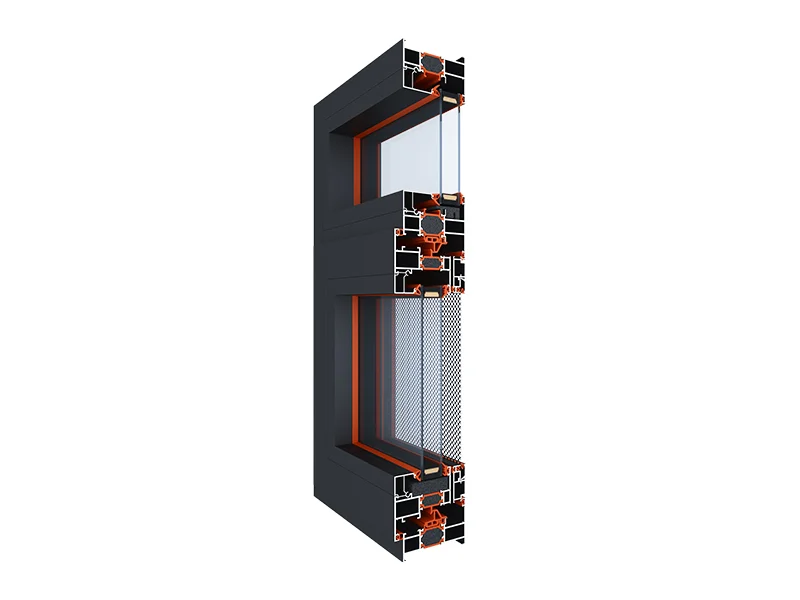
Adaptability of 55 Series Single-Open Windows: Technical Specifications to Clarify When Procuring
When procuring 55 Series Single-Open Windows, it is necessary to clarify with the supplier whether their technical parameters match your project requirements. The following are two key directions to focus on.
How to confirm whether the profile wall thickness and glass configuration meet project requirements?
Directly confirm the core specifications of the product with the supplier. You can ask: "What is the specific profile wall thickness for the 55 Series reference configuration? " (The product reference configuration is 1.4MM), "What is the thickness of the hollow layer in the glass configuration?"
Reference configuration is 5+12A+5). On this basis, further ask: 'Based on this wall thickness and configuration, what standard performance testing reports (such as wind pressure resistance, airtightness) can the product provide?' Requesting the other party to provide reports or clear performance parameter explanations is key to determining if it meets basic requirements.
How to determine if the product is suitable for my specific project scenario?
Questions need to be combined with your specific usage scenario. If it isResidential project, you can ask: 'For the floor where my home is located and the local climate, is this configuration a sufficient choice? Are there recommended enhanced configurations?'
If it isEngineering project, then you should inquire: 'When dealing with the specific wind loads in the region where this project is located, is this configuration within the recommended usage range? For large-area window types, what suggestions do you have for structural reinforcement?' Based on different scenarios (e.g., residential focusing on insulation and noise reduction, engineering focusing on structural safety), asking targeted questions to suppliers can more effectively evaluate the adaptability of their products.
Production and Quality Control: How to judge the supplier's fulfillment capability through questioning?
To determine if the supplier has the capability to deliver stably from samples to mass production, it is necessary to explore through specific questions their inSupplier quality control communicationthe details and basis.
How to confirm the consistency between the sample and the bulk goods?
The sample is in an ideal state. To ensure that the bulk goods match it, the key is to confirm how the supplier manages variables in production. You can ask:
- Sample sealing and change control:“If after sample confirmation, there are batch color differences in profiles or replacement of hardware during bulk production, what is your notification and confirmation process? What is the allowable range for color differences or dimensional deviations?”
- Process execution standards:“During bulk production, is the thickness of the hollow layer in glass, the corner assembly process, the brand and application standards of the sealant, exactly the same as the sample? How to ensure that the production line executes the same set of standards?”
- Verification node settings:“At what stage of bulk production (e.g., 30% completion) can a mid-term inspection be arranged? Before shipment, are there mandatory water spray tests or hardware tests that must be completed, and are corresponding reports provided?”
Which production and quality control issues can expose the true level of the supplier?
The specificity of the questions can reflect the depth of their quality control. Avoid asking “Is the quality good?”, but instead ask about verifiable processes and evidence:
- Inquire about process control:“In key processes such as aluminum cutting and assembly, what methods, equipment, and records do you use for first inspection and patrol inspection?”
- Inquire about defective product handlingIf a batch of profiles is found to have wall thickness below the agreed standard during production, what is your standard handling procedure? Ultimately, who decides the direction of this batch?
- Request to view evidence chainCan you provide a similar order'sProduction processdocument samples, including raw material inspection sheets, in-process quality inspection sheets, and factory reports?
The other party's responseSpecificity、BasisAndCooperation level, is a direct window for assessing the reliability of its quality management system.
How to make decisions after communication: under what circumstances should the 55 series be chosen, and under what circumstances should other solutions be considered?
Based on the information obtained from communication with the supplier, you can proceed from two core dimensions55 Series single opening window selection decision:Matching degree of core requirementsAndCertainty of project conditions. The following are specific criteria for judgment and next actions.
Based on the answers, how to judge if the 55 series is your 'right choice'?
If the supplier's response can clearly and generally meet the following conditions, then the 55 series is a clearly recommended choice in the basic plan:
- Scenario and parameter adaptation: The project is a regular residential or standard engineering project, and the recommended 1.4mm wall thickness and 5+12A+5 glass configuration meet performance standards in your local climate conditions.
- Clear custom support: The supplier confirms that they can customize according to your drawings, and has given clear commitments on delivery time, samples, and mass collaboration details.
- Executable within budget: The cost of this plan is within your budget, and you have reasonable expectations for subsequent installation and other processes.
Which responses indicate that you might need to consider higher specifications or alternative plans?
If the following signals appear in the communication, it indicates that you need to reassess or consider an upgrade plan, which is a keyPlan comparisonstep:
- Insufficient performance: The project has special requirements (such as high wind resistance and severe cold insulation), and the standard configuration cannot ensure compliance.
- Information not transparent: The supplier provides vague or unsubstantiated key quality evidence such as weather resistance reports and hardware compatibility.
- Cooperation ability questionable: Your project involves complex system integration, while the supplier's collaboration model is too simplistic to support it.
Next steps action: Organize the uncertainties in communication and cross-verify them with known project conditions. Based on clearSupplier evaluation conclusion, decide whether to enter into formal quotation negotiations or seek a more professional team (such as Qinhan System Doors and Windows) for in-depth scheme evaluation.
Common problems
1. If the 55 series is deemed suitable, what specifically should be requested from the supplier next? Suggest you request a based on your specific dimensionsFormal quotationAnd supportingTechnical Disclosure, and clarifySample Confirmation. This is a crucial step from communication to collaboration.
2. The supplier says 'customizable', which details should I ask about to avoid later risks? Three points need to be confirmed: First,Design Responsibilityattribution; second, clarify the dimensions and angles,Tolerance Range; third, the parts exceeding the standards,Non-standard Cost Calculation。
3. How to ensure that the glass configuration is truly suitable for the location of my project? Please provide the specific city of the project, and require the supplier to base it on the localEnergy Efficiency Standardsor common practices, to recommend and confirm in writing the most suitable glass configuration plan, rather than judging solely based on the series name.
Learn More
The clarity of procurement decisions begins with a professional communication. If you need more specific technical advice when evaluating the project's door and window plans, or if you would like us to conduct a quick assessment based on your drawings and requirements, you are welcome to submit your project information at any time, and our technical team will analyze and provide a suitable plan for you.
Related products:55 Series Single-Open Aluminum Window