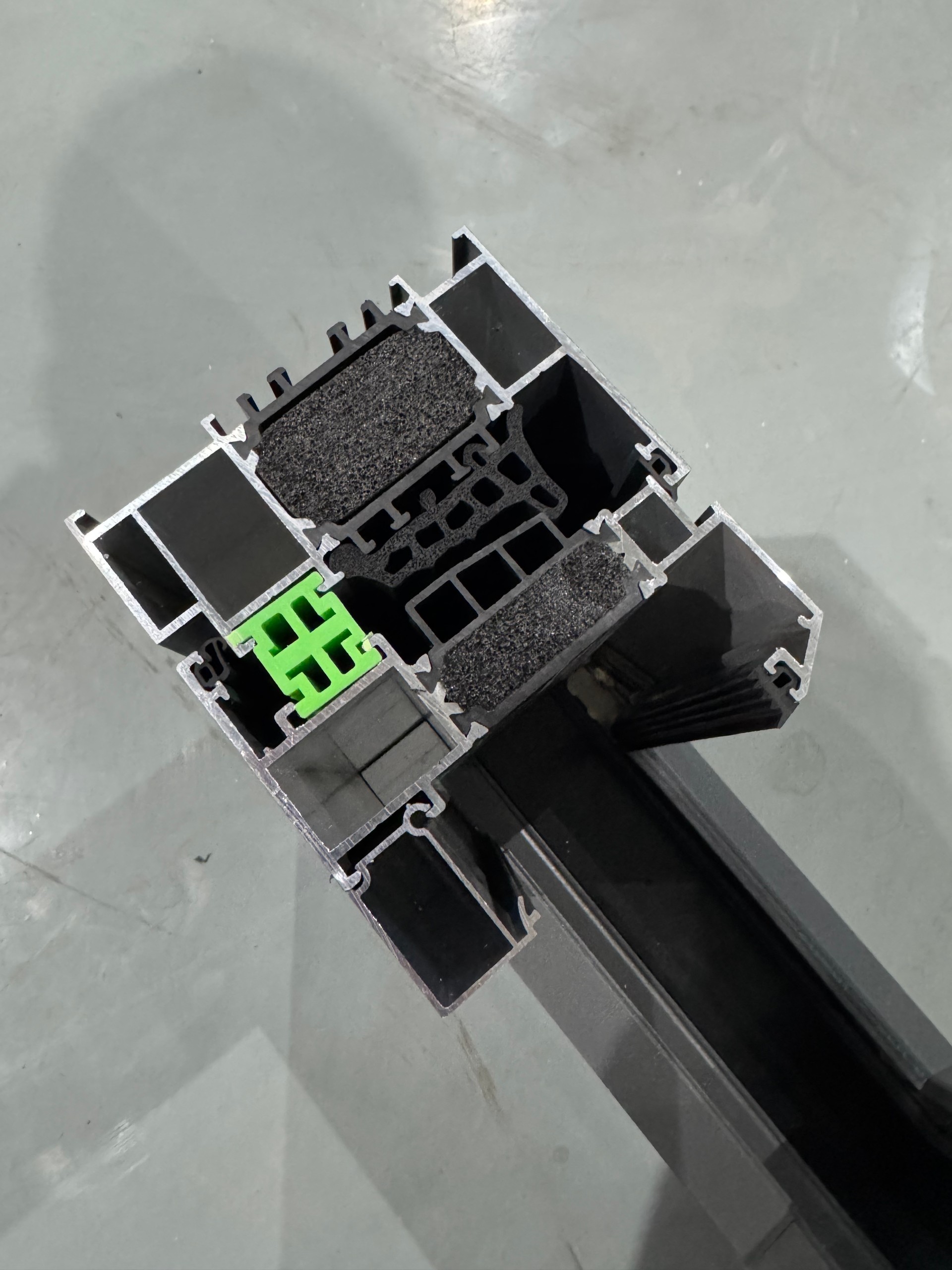
What is the product: Quickly determine if the 90 Series single-opening window meets your initial needs.
What do '90 Series' and 'single-opening' represent in the product system?
'90 Series' refers to the aluminum alloy window profile frame width being approximately90 millimeters, which is a medium specification. This width can typically accommodate thicker glass combinations, providing a foundation for thermal insulation performance. "Single-opening" refers tocasementThe opening method, where the window sash rotates inward or outward to open via hinges.
Which basic parameters need to be verified first in the documentation?
When you receive the product documentation, please first verify the following three core parameters, as they determine the product's basic framework:
- Product English Name: Confirm whether it is '90 profile single opening window'.This is the most direct model identifier.
- Profile Thickness: Check the '1.4MM" this data. It refers to the wall thickness of the main load-bearing members, which is a fundamental indicator of structural strength.
- Material: Confirm "6063-T5 Aluminum Alloy”。6063 is a common alloy, and the T5 temper indicates it has undergone aging treatment, providing more confidence in its basic mechanical properties.
Preliminary Judgment: The 1.4mm wall thickness and 6063-T5 material constitute the product'sstandard baseline configuration.。 If your project is for standard residential or commercial applications, this configuration can meet basic structural requirements. If it involves super high-rise buildings, high wind pressure, or special performance needs, it is recommended to further consult on technical solutions based on these parameters.
Core Confirmation Process: What are the key steps from reviewing materials to proposing a solution?
Before reviewing specific product information, establishing a clear decision-making path is crucial. The following two-step process can help you efficiently transform general information into a preliminary plan suitable for your own project.
Step One: Clarify Your Core Requirements List
Before delving into a detailed analysis of product parameters, please first confirm the following basic information as a benchmark for evaluation:
- Project PositioningClarify whether the application scenario is residential, engineering, or distribution channels, and whether there is a focus on performance (such as sound insulation or thermal insulation).
- Key ParametersPreliminarily determine the range of window opening sizes, the opening method (single-sash), and performance expectations for profile wall thickness and glass configuration.
- Business RequirementsClarify the budget range and expected delivery cycle.
This checklist serves as the 'ruler' for your subsequent screening and inquiries.
Step 2: How to Systematically Interpret Product Data and Quotations
Taking this 90 Series single-opening window as an example, the data can be interpreted as follows:
- Verify Basic Configuration: The reference configuration in the data is6063-T5 aluminum alloy, 1.4MM profile wall thickness, 5+22A+5 insulated glass.。First, determine whether this configuration meets the basic performance and compliance requirements outlined in your Step 1 checklist.If the project is located in a high wind pressure zone or has higher insulation requirements, you need to further inquire about upgrade options (such as thicker wall thickness, Low-E glass, etc.).
- Identify Information GapsCompare your requirements list with the materials item by item.The "reference size 1000*1000mm" in the materials is an example; you need to confirmthe actual customizable size range.Additionally, the materials usually do not list all details.
- Determine communication pointsClarify which information must be confirmed with the supplier.Based on the product facts, you need to proactively ask:
- Customization boundaries: Besides dimensions, are the handle, lock points, hardware brand, and sealing strip color optional?
- Quotation Composition: Does the quotation include only the profiles, or does it already include glass, hardware, auxiliary materials, and installation?How are transportation and taxes calculated?
- Fulfillment Details: For bulk orders, what are the production cycle, quality acceptance standards, and after-sales response terms?
In short: First, use a requirements list to set the direction, then use product information for an initial match, finally mark all uncertain items, and communicate with the supplier with a clear list. This ensures the resulting solution is precise and reliable, avoiding subsequent deviations.
Decision Boundary: When is the 90 Series suitable, and when should other solutions be considered?
Based on the current standard configuration of the 90 Series single-opening aluminum alloy window (1.4mm wall thickness, 5+22A+5 insulated glass), its decision boundary is very clear:It provides a cost-effective, clearly deliverable starting point for 'standard requirements'.Whether your project qualifies as 'standard' is the key to making a choice.
Typical Scenarios for Recommending the 90 Series Single-Opening Aluminum Alloy Window
When your requirements simultaneously meet the following points, you can directly prioritize this product as a solution:
- The project type is a conventional residence or standard construction.For example, window procurement for standard apartment layouts, or door and window configurations for standardized office spaces or retail shops.These projects typically pursue reliable, stable, and general-purpose performance.
- Parameter requirements match or are close to standard configurations.Performance expectations for profile wall thickness (1.4mm) and basic glass configuration (5+22A+5 insulated glass) fall within the coverage of standard parameters.
- The decision is in the 'model selection' or 'price comparison' stage.You already have a clear design intent or drawings, and need to compare and make decisions based on a clear, quantifiable quotation basis.
- The collaboration model requires sample verification and batch consistency.Suitable for engineering projects or distribution channels that require sending samples first to confirm physical quality, followed by batch procurement.
In which situations is it recommended to postpone or consider other options?
Before entering into specific communication, the following situations may indicate that the current standard configuration is not necessarily the best choice, and it is recommended to further clarify the requirements:
- There are clear extreme requirements for physical performance: For example, the project is located in a coastal high-wind-pressure area, or there are special testing standard requirements for air tightness and water tightness that far exceed the norm.At this point, the decision gap is: whether the final performance data of the 1.4mm wall thickness and standard hardware configuration meets your specific specifications? This needs to be confirmed with the technical team regarding the inspection report grade the product can achieve.
- The design requires highly customized integration: If your architectural design requires non-standard window divisions, special colors, or surface treatments to perfectly blend into the facade.The decision gap is: Does the color library of the current standard product line match your project timeline in terms of the response scope, cost, and lead time of the customization service?
- The project is in the early planning stage, with frequently changing requirements.If the architectural drawings are not yet finalized, expectations for the series, opening method, or configuration are still undergoing significant adjustments.Locking in a specific product model too early may lead to costs and risks associated with later changes.
Your next step: If your situation falls somewhere between the two scenarios above, or if you have any doubts about any point, the most effective approach is toprovide your specific drawings or clear technical requirements (such as the target wind pressure resistance value, desired surface finish) directly to our team.Based on the boundary conditions you provide, we will determine whether the current 90 Series is the best starting point, or which parameters need to be adjusted to match you with a more precise solution.
Next Step: How to proceed to specific solution communication after confirming the process
After completing the confirmation of product parameters, usage scenarios, and your own requirements, the next step is to translate these thoughts into an efficient solution consultation. Preparing key information before contacting the team allows you to receive targeted solution recommendations in the first communication, rather than a general introduction.
Organize your confirmation checklist and questions for communication
Before contacting hyperstron, it is recommended that you clearly list the following information in a document or memo. This will help the team quickly understand your project background:
Basic Project Information
- Project Name or Code
- Purchaser's role (e.g., general contractor, brand owner, distributor, property owner)
- Final product application (e.g., living room windows for a residential project, ventilation windows for a commercial building)
Key technical requirements
- Do you already have complete door and window drawings?If so, please prepare them, as this is the basis for customization communication.
- Core size requirements: Are standard sizes (e.g., 1000*1000mm reference dimensions) predominant, or are there more non-standard sizes?
- Performance priorities: Among airtightness, water tightness, wind pressure resistance, and sound insulation/thermal insulation, which items are the top considerations?
Commercial and delivery expectations
- Order Volume: Is it a sample trial order, small-to-medium batch, or long-term bulk demand?
- Expected delivery timeline or approximate project duration.
How to efficiently initiate a solution consultation with the Hyperstron team
The core of the initial consultation is to verify the product's match with your needs and explore customization possibilities. Based on your confirmation checklist, you can focus communication on the following aspects:
- Focus on Scenario Verification: Directly describe your project's intended use and key performance priorities. Inquire whether the recommended configuration for the 90 Series single-opening aluminum alloy window (such as profile wall thickness, glass combination) can meet the primary needs in this scenario.
- Explore Customization BoundariesIf the project has special requirements, this is a key step to confirm capabilities.You can directly ask:
- Drawing customization: Can my drawings be used directly for production?What are the requirements for drawing complexity and tolerances?
- Material adjustment: Within the 90 Series framework, can the profile wall thickness (e.g., exceeding the reference 1.4mm) and surface treatment color be adjusted?
- Glass configuration: Besides the reference 5+22A+5 configuration, can the glass type (e.g., Low-E, laminated) and hollow layer thickness be adjusted as needed?
- Clarify Collaboration and ProcessInquire about the standard process and timeline from scheme confirmation, quotation, sampling to mass production, and confirm the sample provision policy.
Prepare the checklist on the left, take the communication points on the right, and you can directly contact the hyperstron team to initiate a formal consultation. This ensures that both parties align their requirements from the root of the project, laying a clear foundation for subsequent sample production and mass production plans.
Frequently Asked Questions
Q: My project drawings are complex and include special opening and closing structures. Can they be used directly? A: hyperstron products are typically customizable based on drawings, but for highly complex structures or non-standard hardware systems, the team needs to conduct a feasibility assessment based on the drawings. It is recommended that you provide the drawings directly for the technical team to confirm the implementation plan and any potential impacts.
Q: My project has requirements for thermal insulation performance. Should I directly choose a thicker profile? A: Not necessarily. The overall thermal insulation performance of the 90 Series single-opening window is jointly determined by the profile cavity structure, sealing system, and glass configuration.
You can specify the exact thermal insulation requirements (such as K-value), and the team can help you assess whether adjusting wall thickness, adding thermal breaks, or optimizing the glass configuration is the most cost-effective way to meet the needs.
Q: After the initial consultation, approximately how long does it take to receive a specific quotation proposal? A: This depends on the complexity of the proposal. For inquiries using standard configurations and dimensions, the response will be quicker.
If detailed design based on drawings is required or multiple rounds of configuration adjustments are involved, the time needed will be correspondingly extended. Clearly stating the project urgency during communication helps the team arrange priorities.
Learn More
Once you have initially assessed the suitability of the 90 Series single-opening aluminum alloy window, or if you have any questions regarding parameters or scenario matching, you are welcome to provide us with your project drawings, specific technical requirements, or a list of needs.The technical consultants at Qinhan System Doors and Windows will conduct a targeted assessment for you and provide feasible solution recommendations and quotations.
Related Products:90 Series Single-Opening Aluminum Alloy Window