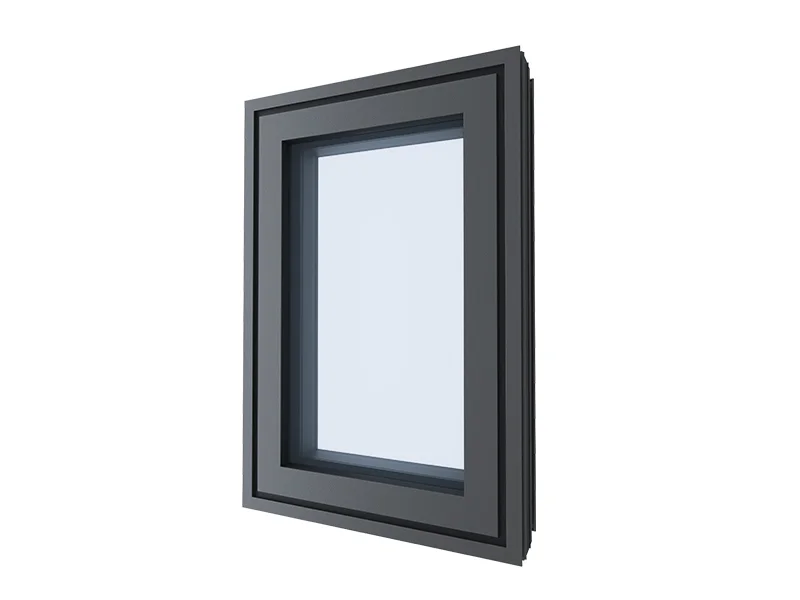
The 55 series single-opening aluminum alloy window is a widely used standardized window type, where '55' refers to the width of the window frame profile being 55 millimeters, and 'single-opening' refers to its side-hung opening method. In residential and conventional commercial projects, this window type is often used where a balance between cost and basic performance is required.
The procurement budget for a window is primarily composed of four core parts: profiles, glass, hardware, and auxiliary materials and installation services. Understanding the weight and determinants of these parts is the first step in formulating a reasonable budget.
Breaking Down the Cost Composition: Where Does the Money Mainly Go?
| Budget Component | Decision Core and Influencing Factors | Corresponding Cost Performance |
|---|---|---|
| Profiles | Aluminum alloy grade, wall thickness, surface treatment process (e.g., powder coating, anodizing) | In standard configurations, usually accounts for a significant proportion of the cost and is the foundation of structural strength. |
| Glass | Glass type (insulated, Low-E), layers, insulated layer thickness | Directly affects the insulation and soundproofing performance of the window, and is the main functional cost item. |
| Hardware | Brand, series, load-bearing grade, corrosion resistance | Affects the opening and closing feel, service life, and safety, with brand differences leading to significant price gaps. |
| Auxiliary Materials and Installation | Quality of sealants, screws, and other auxiliary materials, installation process, transportation, and labor costs | Determines the final sealing effect and installation quality, which is a hidden but critical cost. |
Taking a typical reference configuration of the Qinhan system 55 series single-opening window (for example, sash size 1000mm × 1000mm, profile wall thickness 1.4mm, glass using 5mm+12A+5mm insulated configuration) as an example, its budget baseline is mainly anchored on 6063-T5 aluminum alloy profiles, standard insulated glass, and matching hardware.
When considering upgrades, such as replacing the glass system with higher-performance triple glazing or Low-E coating, or selecting imported brand hardware with higher load-bearing capacity and better feel, the increased budget will be directly reflected in these corresponding items.
When planning the budget for 55 series single-opening aluminum alloy windows, it is crucial to view profiles and glass as 'fixed core investments' because they directly determine the product's basic performance and long-term reliability. This is not an absolute conclusion but a common judgment based on the product meeting basic usage standards.
Profile Wall Thickness (Using Reference Value of 1.4mm): The Cornerstone of Strength and Stability
The thickness of the profile forms the strength foundation of the window frame. For the 55 series window type, a wall thickness of 1.4mm is a common configuration to ensure the sash structure is firm and not easily deformed over long-term use.
This thickness mainly affects three aspects: the overall strength of the window frame, resistance to wind pressure, and long-term structural stability. If a thinner profile is chosen to save costs on this parameter, it may affect the smoothness and sealing of the window during daily opening and closing, and increase the risk of deformation when facing high wind pressure, thereby potentially increasing maintenance needs later.
Glass Configuration (Using Reference Value of 5+12A+5): Basic Guarantee of Function and Safety
'5+12A+5' refers to two 5mm thick glass panes on the inside and outside, with a 12mm wide aluminum spacer (A represents the air layer) in between. This configuration provides basic insulation, soundproofing, and safety functions for the window.
The 12mm air layer is a key layer for achieving effective thermal insulation and soundproofing. If glass thickness or air layer width is reduced to save budget, the window's insulation and soundproofing performance will be directly affected and may not meet expected comfort requirements. Additionally, the glass itself is related to basic safety.
Therefore, using reference standards for profile wall thickness and glass configuration is to ensure the window can stably perform its basic functions over long-term use.
Summary: Profile thickness and glass configuration are the cornerstones of product performance. During selection, ensuring these two parameters meet the minimum performance standards required by the project is the priority for guaranteeing future stability and basic functionality.
Understanding the applicable boundaries of 55 series single-opening aluminum alloy windows helps determine whether it can meet your project needs and under what conditions configuration or series upgrades are needed.
Typical Applicable Scenarios and Budget Priorities
In residential window configuration projects, if the 55 series single-opening aluminum alloy window is selected, the budget should prioritize its core safety and durability configurations. For example, prioritize using 6063-T5 aluminum alloy profiles and baseline wall thickness (such as reference configuration 1.4mm) to ensure structural strength. At the same time, investment in basic hardware and sealant quality should also be emphasized to ensure long-term performance.
Glass configuration can be flexibly adjusted based on the project's specific insulation requirements, thereby optimizing total budget allocation while meeting basic needs. This budget strategy helps balance performance and cost in common environments.
Boundary Cases Requiring Careful Evaluation or Consideration for Upgrades
The 55 series single-opening window is suitable for regular residential projects with clear goals and limited budgets, and can be a cost-effective choice when its core configurations meet standards. However, if the project involves the following situations, it requires more cautious evaluation, and the budget may need to prioritize upgrading the product series or core configurations rather than saving within the 55 series:
- Size and Opening Requirements: When the designed single-opening sash size is significantly increased (e.g., obviously exceeding the reference size of 1000mm), enhanced profile wall thickness or selection of a wider series may be needed to ensure rigidity.
- Environmental and Performance Requirements: For projects in coastal, high-rise, or high wind pressure areas, or with strict specifications for soundproofing and insulation, the basic configuration may need upgrading to meet higher performance standards.
- Building Facade Design: For floor-to-ceiling windows or main lighting facades, there may be higher requirements for safety and appearance, which may necessitate adjusting the glass system or adding configurations such as thermal breaks.
In such boundary cases, it is recommended to consult a professional team directly to confirm the suitability of the solution based on the project's location, specific dimensions, and performance requirements.
After determining to use the 55 series single-opening aluminum alloy window, while ensuring its core performance (such as strength, water tightness, basic soundproofing and insulation), there is indeed room for optimizing the total budget. The key is to distinguish between 'core performance components' and 'functional configuration components' and focus resources on the former.
Flexible Budget Adjustment Space
For standard window types like the 55 series, adjustments are usually made around the following three aspects without sacrificing main performance:
- Hardware Accessories: This is the most common cost adjustment area. Hardware systems (handles, hinges, lock points, etc.) have obvious brand and grade differences. While meeting basic smooth opening/closing and locking force, cost-effective reliable brands can be chosen instead of high-end imported brands. However, it is necessary to ensure that the selected hardware's load-bearing capacity and corrosion-resistant life match the sash weight.
- Auxiliary Materials and Sealant Strips: Auxiliary materials such as foaming agents, sealants, glass shims, and sealant strips around the window frame have significant price differences between brands that meet national standards. Choose products from suppliers with formal testing and stable reputation; there is no need to pursue top brands. However, the material of the core sealing system's strips (e.g., EPDM rubber) should not be lowered.
- Appearance Treatment: Standard colors (e.g., white, champagne) have the lowest powder coating costs. Special colors or wood grain transfers will increase costs. The style of handles and other accessories also affects unit prices, with basic models being more economical.
More Stable Core Investments That Should Not Be Compressed
- Profile Wall Thickness: The reference wall thickness is 1.4mm, which is the foundation for ensuring frame rigidity and wind pressure resistance. It should not be thinned to reduce costs.
- Glass Configuration: The reference configuration is 5+12A+5 insulated glass. It can be adjusted to different brands of glass, but it is not advisable to easily reduce glass thickness or lower the insulated layer thickness below 9mm, as this will significantly affect soundproofing and insulation performance.
- Corner Assembly Process: The corner assembly process is directly related to the structural strength and sealing of the window frame, and this process standard should not be lowered.
Procurement Communication: How to Confirm Price Differences and Value Correspondence
When communicating with suppliers, a clear quote comparison can help you quickly identify cost composition. You can focus on asking and comparing the following points:
- Request Itemized Quotes: Ask suppliers to provide itemized quotes that include at least: profiles, glass, hardware, auxiliary materials, assembly processing fees, and installation fees. Vague 'bundled prices' are not conducive to cost analysis.
- Focus on Key Parameter Conversion:
- Profiles: Ask for the 'price per ton' or 'price per kilogram' of the profile, and confirm that its alloy grade (e.g., 6063-T5) and wall thickness meet your requirements.
- Glass: Clarify the brand, thickness, and specific specifications of the insulated layer (e.g., 12A represents a 12mm aluminum spacer).
- Hardware: Directly ask for the brand and series model of the hardware to easily judge its market positioning.
- Pay Attention to 'Hidden' Costs: Check whether transportation, floor delivery fees, oversize fees, special hole fees, etc., are included in the quote. Different suppliers may have different pricing methods.
A practical communication technique is: after clarifying your core requirements (e.g., wall thickness, glass configuration, basic hardware functions), issue identical technical requirements to 2-3 suppliers for inquiry. At this time, price differences will mainly be reflected in brand selection, management efficiency, and process control. You can take Supplier A's advantages (e.g., better hardware brand) and ask Supplier B how much the cost increases for this item, thereby making clear trade-offs.
The final choice should not only look at the lowest total price, but also at the 'cost under the same core configuration' and the clarity of the supplier's commitments on key terms (e.g., warranty scope, replenishment cycle).
Frequently Asked Questions
To save money, should I change the glass from 5+12A+5 to thinner glass or make the insulated layer thinner? Will the performance be much worse?
Yes. Glass thickness and insulated layer thickness directly affect soundproofing and insulation performance. Reducing the insulated layer from 12mm to 6-9mm will cause a noticeable decline in insulation and soundproofing effects. If the project location has clear requirements for energy efficiency or soundproofing, this configuration should not be easily lowered.
Quotes from different suppliers are all over the place. How can I quickly see where the money is going?
Don't just look at the total price. Ask each supplier to break down the quote into three main parts: 'profiles, glass, hardware'. Then, you can calculate the profile cost and glass cost per square meter yourself. This way, even if the total prices differ, you can clearly compare where the money per square meter is spent on which more expensive component.
Our project has low requirements. Can I use the most basic hardware and auxiliary materials?
Yes, but you must set a bottom line. Hardware must ensure normal opening/closing lifespan and basic locking safety; auxiliary materials (e.g., strips, sealants) must comply with relevant national standards to prevent premature aging failure. Clarify with the supplier that you need 'economy' products that meet the project's service life, not 'cheap' products without standards.
Further Information
Understanding the complete selection and procurement points for 55 series single-opening aluminum alloy windows is the first step in making informed decisions. After clarifying your project's dimensions, environment, and performance requirements, you are welcome to further understand product technical parameters or communicate with our team about specific working conditions to obtain more targeted solution recommendations.
Related product: 55 Series Single-Opening Aluminum Alloy Window