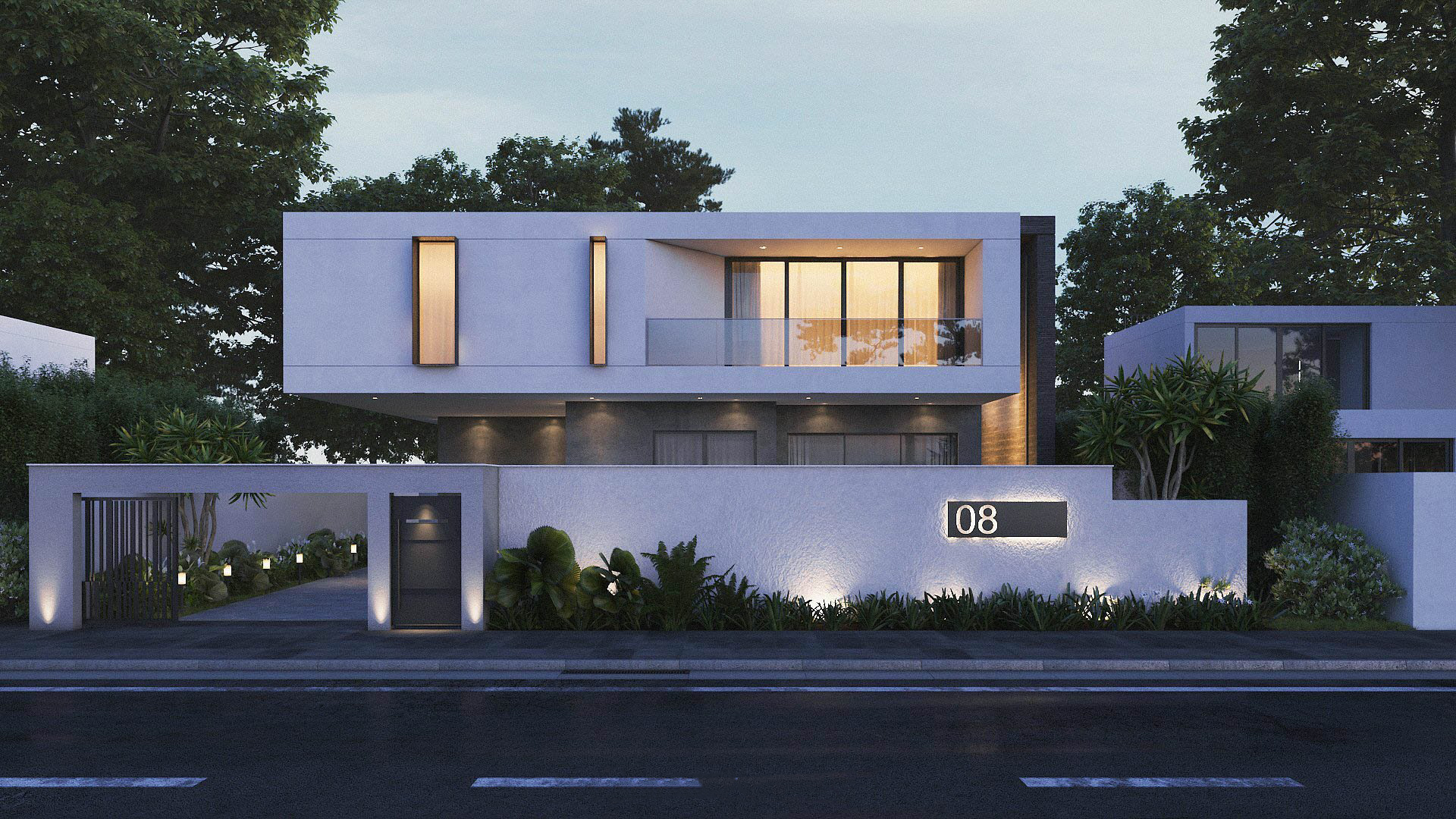
The price differences for the 90 Series thickened single-opening aluminum alloy windows are essentially differences in configuration and service.
Why can the quotation for the same model vary by double?
Because the "90 Series thickened single-opening aluminum alloy window" itself is a product framework, not a standardized product with fixed specifications. Based on common market phenomena, the final price differences mainly stem from two levels:
First is the customized configuration combination. Even within the same 90 Series, the actual wall thickness of the aluminum profile (e.g., 1.8mm or thicker), the specific glass configuration (e.g., 5mm+22A+5mm or Low-E insulated glass), and the brand and origin of the hardware fittings—the combination of these elements directly determines the base cost.
Second is the scope of service included in the quotation. A complete quotation typically covers measurement, detailed design, transportation, installation, commissioning, and after-sales warranty. However, a quote that only provides the "ex-factory price" may not include these services, leading to a seemingly lower total cost.
Therefore, procurement decisions need to move beyond the misconception of "only looking at the total price" and enter the stage of "breaking down the configuration to assess value." To obtain comparable quotes, you should clarify the specific configuration parameters and service list with the supplier.
In which dimensions do the price differences mainly manifest?Item-by-item comparison from profiles and glass to hardware
The large difference in quotes is primarily due to the different specific specifications and qualities of the three components that make up the window: the "frame," "glass," and "hardware." For the 90 Series thickened single-opening window, the main differences are reflected in the following aspects:
Profiles and Glass: The core determining basic performance and cost
Profile Thickness (Wall Thickness): This is the primary factor affecting strength and cost. Taking 1.8MM and 1.4MM as examples, the 0.4MM difference has a multifaceted impact on the entire window. First, a profile with a 1.8MM wall thickness has a larger cross-section and higher physical strength, allowing it to better resist wind pressure deformation, making it particularly suitable for projects in high-rise or coastal windy areas.
Second, a thicker profile means that each ton of aluminum can produce a shorter length of window frame, which is directly reflected in the raw material cost. Although 0.4MM may seem minor, in large-volume procurement, this cost difference will be amplified.
Glass Configuration: The price is mainly influenced by two parameters: the number of layers and the width of the insulating layer. For example, a standard "5+22A+5" (two layers of 5mm glass with a 22mm air gap) compared to a "5+12A+5" configuration, the wider air gap provides better thermal and acoustic insulation performance, and its cost is correspondingly higher. If triple glazing is used (e.g., 5+9A+5+9A+5), the thermal insulation performance will be further enhanced, but the weight and price also increase significantly.
These performance metrics are directly linked to the energy efficiency standards of the project's location and the client's actual needs.
Hardware and Craftsmanship: Key Factors Affecting Long-Term User Experience
Hardware Quality: "Where does the cost of good hardware lie? "It primarily lies in the material, load-bearing capacity, durability, and operational feel. For example, whether hinges are made of zinc alloy or stainless steel, whether the internal transmission structure of the handle is precise, and the number and material of the locking points all directly affect the smoothness of opening and closing the window, its security, and its service life.
High-quality hardware ensures greater reliability even after tens of thousands of opening and closing cycles, reducing long-term maintenance costs.
Craftsmanship and Assembly: Beyond the visible hardware, the precision of profile splicing, the corner bracket connection process, the material and number of sealing strips, and the design of the drainage system collectively determine the window's final airtightness, watertightness, and overall appearance. These details may not be itemized in the quote, but they are a key reason why two windows that 'look similar' can have a significant price difference.
Summary and Next Steps: A quote reflects the comprehensive configuration of the product. You need to clarify the specific requirements of your project: is it an economical configuration focused on basic strength, or a high-performance comfort-oriented solution? We recommend providing the specific application scenario (e.g., floor level, climate), performance requirements (sound insulation, thermal insulation grade), and budget framework to a Hyperstron product consultant. They can match you with the most suitable profile wall thickness, glass combination, and hardware grade, and provide a tailored quotation plan.
Does your project require high-end configurations?It depends on the usage scenario and risk expectations.
The core of the price difference lies in whether the configuration precisely matches your usage scenario and risk tolerance. The selection of the 90 Series thickened single-opening aluminum alloy windows should be based on weighing cost and performance according to the nature of your project.
Residential Window Configuration: Balancing Comfort and Budget
In residential scenarios, the noise environment is a key variable. If the residence is near a street or main traffic artery, choosethickened profiles (e.g., 1.8mm) and high-performance insulated glass (e.g., 5+22A+5) It can significantly improve sound insulation and safety, making this investment worthwhile. Conversely, for internal residential areas or low-floor, low-noise environments, a standard configuration can be chosen to control costs, balancing the budget with basic comfort.
Engineering Project Procurement: Focus on Long-Term Reliability and Compliance
Procurement for engineering projects must prioritize long-term reliability and compliance. The following configuration items in the quotation must be strictly controlled:
- Profiles and GlassThe thickness and material of the profiles (e.g., 6063-T5 aluminum alloy) must meet the building codes and structural load requirements of the project location.The glass must comply with building safety standards (e.g., tempered requirements).
- Hardware and SealsThis directly affects the window's service life, air tightness, and maintenance costs; their brand and durability should be confirmed.
For bulk procurement, attention must also be paid to the supplier's quality control consistency and supply capacity to ensure the construction schedule and overall project quality.
Trade-offs with Limited BudgetIf the budget is tight, consider adjusting the glass's energy-saving parameters or the hardware brand for non-main facades or windows with low usage frequency. Butcompromises should not be made on the profile wall thickness related to structural safety, the glass safety requirements for critical areas, or the hardware quality in high-frequency use locations.。
Please consult us based on your specific scenario, performance priorities (such as noise reduction, energy saving), and budget. We will provide a matching configuration plan to avoid paying for unnecessary performance and to prevent long-term risks caused by insufficient configuration.
How to compare quotes and make a decision?Question checklist for suppliers
When faced with significantly different quotes, a clear question checklist can help you see through the price facade and identify the true value and potential risks. Below are the core items you should proactively confirm when inquiring with any supplier (including us), with the aim of transforming price comparison from passive acceptance to proactive quality and cost management.
When comparing quotes, be sure to confirm these three items
The total price of a quote may be influenced by various factors. To make an effective comparison, you need to break down each quote into the following key dimensions:
- Actual Specifications and Cost of the Profile: This is the basis of the cost.Please confirm theprofile thickness(e.g., is it 1.4mm or 1.8mm) andalloy grade(e.g., 6063-T5).Thickness and alloy temper are directly related to the profile's material cost, strength, and durability.Under the same "90 Series", differences in these parameters are one of the main reasons for the price variation.
- Quality and Cost Proportion of Hardware Fittings: Hardware fittings are the "heart" of a window, with vast differences in cost and performance.Please specifically inquire about thebrand, place of origin, and source of the hardware fittings(whether they are original imports, joint ventures, or domestically produced).The cost difference between a set of high-quality hardware and ordinary hardware can account for a significant proportion of the total price and directly affects the service life and user experience.
- Glass Configuration and Processing FeesConfirm the specific configuration of the glass in the quotationglass configuration(such as the Low-E coating in 5+22A+5, whether the hollow layer gas is filled, and the aluminum strip process) and whether it isstandard size. Any window opening size exceeding standard specifications or special-shaped processing (such as corners, arcs) will incur additional mold opening fees or processing fees. Are these included in the quotation?
Question Checklist for Communicating with Suppliers
When requesting a quotation or afterwards, it is recommended to obtain the information needed for decision-making through the following questions:
Regarding Materials and Cost Composition:
- "Please clarify the profile model on which the quotation is based.What is the actual wall thicknessHow much is it? Can you provide a material report or specification for the profile?
- "The hardware included in the quotationhardwarespecifically what brand and series?What approximate percentage of the total quotation does its cost represent?”
- "If my project requiresLow-E glassortriple-pane double-cavityconfiguration, what is the price difference compared to the standard configuration (e.g., 5+22A+5)?"”
Regarding Quote Transparency and Total Cost:
- "Does this quote covertransportation, unloading, and installation?What is the cost? Or are these calculated separately?
- "For thenon-standard sizeFor the windows in my project, will there be mold opening fees or additional processing fees? Please provide details.
- "Is the final total price a fixed 'turnkey' price, or apreliminary budget?Please explain the price breakdown details.”
Ensure transparent quotations and avoid hidden fees.
To make the quotation clear and unambiguous, the key lies inpre-communicationandclear contract terms.Before finalizing the partnership, be sure to jointly confirm with the supplier adetailed cost breakdown sheet., and not just a total price. This document should cover as much as possible: profile costs, hardware costs, glass costs, processing and fabrication fees, and standard accessory fees.
At the same time, clearly stipulate in the contract or orderthe price validity period、the adjustment mechanism for material price fluctuationsas well asall scenarios that may incur additional costs.。
Frequently Asked Questions
Question: When purchasing the 90 Series thickened single-opening aluminum alloy windows, does the Minimum Order Quantity (MOQ) typically affect the quotation? Answer: Yes. For contractors or distributors, a larger order quantity usually allows for a more favorable unit price, as it spreads out the costs of production line adjustments and logistics.
Small-batch orders may have a higher unit price due to the high proportion of fixed costs.
Question: If my project drawings require minor adjustments to the standard 90 Series window type, is this feasible? How would this affect the price and delivery time? Answer: For minor adjustments where the profile die hole positions remain unchanged (such as reducing dimensions within a reasonable range), production can usually proceed directly, possibly involving only a small change in material cost due to the size adjustment.
If a new die needs to be created, a one-time mold fee will be incurred, and the delivery time may be extended. It is recommended to provide specific drawings for confirmation.
Q: What does the "90 Series Thickened" mentioned in the quotation specifically refer to? Compared to the standard series, where is the performance improvement? A: The "90 Series" typically refers to a window frame width of approximately 90mm.
"Thickened" in this context generally refers to the profile'swall thickness reaching 1.8mm, which offers superior wind pressure resistance, structural strength, and durability compared to thinner standard profiles (e.g., 1.4mm), making it particularly suitable for high-rise residential buildings or engineering exterior windows. Specific performance must be assessed comprehensively based on the profile's alloy temper (e.g., 6063-T5).
Learn More
The configuration of every window is a long-term investment.To avoid paying for unnecessary performance or taking on risks due to insufficient configuration, we recommend you submit your project's specific scenarios (floor level, climate, noise requirements) and budget framework to us.Qinhan System Windows and Doors product consultants will help you sort through the selection logic, match the most suitable configuration plan, and provide a clear and transparent quotation.
Related Products:90 Series Thickened Single-Opening Aluminum Alloy Window